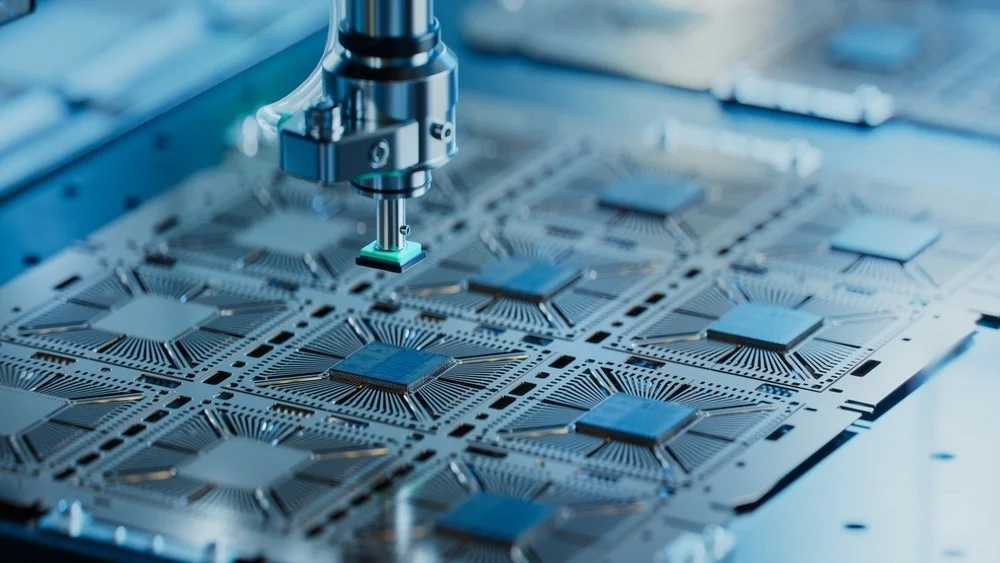
The Edge AI Hardware Market 2025–2035: Supply Chain, Market Drivers, and Outlook
GET A FREE SAMPLE
NEED A CUSTOM REPORT?
We can customize every report including purchasing stand-alone sections or country-level reports, as well as <b> offer affordable discounts for start-ups & universities.</b>
Share this report:




Introduction
Key Report Highlights
Dominant Segments
Competitive Intelligence
Strategic Insights
Regional Dynamics
Powering Intelligent Devices: Why Our Global Edge AI Hardware Market Report is Essential for the Future of Real-Time Computing
The global Edge AI Hardware market is a fast-growing segment of the semiconductor and artificial intelligence industry, driven by the increasing need for real-time data processing, low-latency decision-making, and on-device intelligence. Edge AI hardware enables AI computations to be performed directly on devices such as smartphones, cameras, sensors, drones, and industrial machines without relying heavily on cloud infrastructure. With the rapid expansion of IoT, autonomous systems, and smart devices, the market is witnessing strong global growth.
1. By Component: Processors (Dominant Segment)
AI processors (GPUs, NPUs, and ASICs) hold the largest market share.
Why it dominates:
- High-performance computing for AI workloads
- Essential for real-time inference at the edge
- Widely used in smartphones, cameras, and autonomous systems
- Continuous advancements in chip efficiency and architecture
2. By Device Type: Edge Devices (Dominant Segment)
Edge devices such as cameras, sensors, and gateways lead the market.
Why:
- Rapid adoption in smart homes and smart cities
- Growing use in industrial automation systems
- Enables localized AI processing and reduced latency
- Expanding IoT ecosystem
3. By Application: Smart Surveillance & Autonomous Vehicles (Dominant Segment)
Smart surveillance and autonomous systems dominate demand.
Why:
- Real-time video analytics and object detection
- Critical for self-driving and ADAS systems
- Increasing security requirements in urban areas
- High-speed decision-making without cloud dependency
4. By End-Use Industry: Automotive & Industrial (Dominant Segment)
Automotive and industrial sectors are leading adopters.
Why:
- Growth of electric and autonomous vehicles
- Industrial automation and predictive maintenance
- Need for low-latency AI decision systems
- Increasing integration of smart robotics
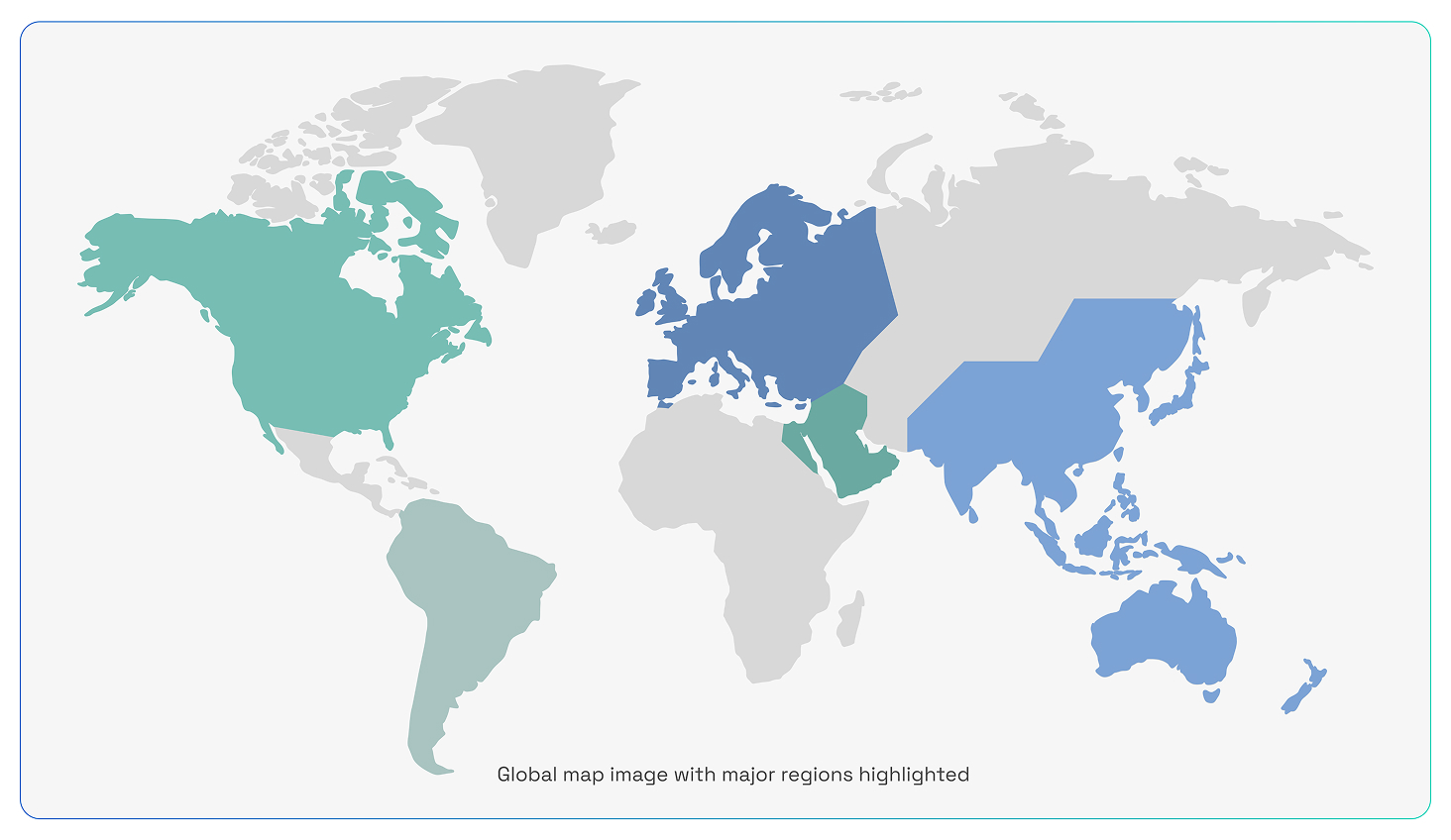
5. By Geography: North America (Dominant Region)
North America leads the global market.
Key factors:
- Strong presence of AI chip manufacturers and tech firms
- High investment in AI and semiconductor R&D
- Early adoption of edge computing technologies
- Advanced digital infrastructure
Fastest-growing region:
- Asia-Pacific
Drivers: What is fueling market growth?
- Rapid expansion of IoT and smart devices
- Need for real-time, low-latency AI processing
- Growth in autonomous vehicles and robotics
- Increasing demand for data privacy and on-device computing
- Advancements in AI chip technologies
Restraints (R) – What is limiting growth?
- High cost of advanced AI hardware components
- Power consumption and thermal management issues
- Complexity in hardware-software integration
- Limited standardization across devices
Opportunities (O) – Where is future growth coming from?
- Expansion of smart cities and connected infrastructure
- Growth in edge-based healthcare devices
- Adoption in industrial IoT and robotics
- Development of energy-efficient AI chips
Trends (T) – What is shaping the future?
- Shift toward ultra-low-power AI accelerators
- Integration of AI with 5G and edge computing
- Rise of hybrid edge-cloud architectures
- Increasing use of neuromorphic computing
Methodology
We use a stepwise research approach combining secondary research, primary validation, and data triangulation to estimate market size and forecast growth.
| Step | What we do |
|---|---|
| 1. Secondary research | Review public sources (company disclosures, industry publications, and credible datasets) to map the market and build baseline assumptions. |
| 2. Primary inputs | Validate assumptions through expert inputs (manufacturers, technology providers, and domain specialists). |
| 3. Sizing & forecasting | Apply structured sizing methods and forecast models using adoption trends, segment mix, and regional demand patterns. |
| 4. Triangulation | Cross-check estimates across multiple methods and sources to ensure consistency and reduce bias. |
Outlook of the Edge AI Hardware Market
How Edge AI Hardware is Revolutionizing Real-Time Data Processing and Intelligent Devices
💻 Key Applications
- Industrial IoT and Smart Manufacturing
- Autonomous Vehicles and Robotics
- Smart Cameras and Security Systems
- Edge AI in Healthcare Devices
- Consumer Electronics and Wearables
📈 Business Benefits
- Low-Latency Data Processing
- Energy-Efficient and Cost-Effective Operations
- Enhanced Security and Privacy at Edge
- Supports Real-Time AI Decision Making
- Scalable Integration Across Devices
Core Technologies
- AI Accelerators and Edge Processors
- Low-Power Computing Architectures
- Embedded Neural Networks
- Edge Analytics Platforms
- Integration with Cloud AI and IoT Systems
Market Scope & Analysis
1. By Component
- Processors (CPU, GPU, NPU, ASIC)
- Memory
- Storage
- Network Devices
2. By Device Type
- Edge Devices (Cameras, Sensors)
- Edge Servers
- Gateways
- Wearables
3. By Application
- Smart Surveillance
- Autonomous Vehicles
- Industrial Automation
- Healthcare Devices
- Smart Cities
4. By End-Use Industry
- Automotive
- Manufacturing
- Healthcare
- Retail
- IT & Telecom
5. By Geography
- North America
- Europe
- Asia-Pacific
- Latin America
- Middle East & Africa
- Advanced Micro Devices (AMD)
- IBM Corporation
- Micron Technology
- Arm Holdings
- North America
- Europe
- Asia-Pacific
- Latin America
- Middle East
- Africa
- United States
- Canada
- Germany
- United Kingdom
- France
- China
- India
- Japan
- South Korea
- Australia
- Brazil
- Mexico
- United Arab Emirates
- Saudi Arabia
Recent Developments
Recent Developments
In February 2025, NXP Semiconductors announced the acquisition of edge-AI chip startup Kinara for $307 million. The deal strengthens NXP’s portfolio of edge AI processors by integrating Kinara’s neural-processing units (NPUs), including the Ara-1 and Ara-2 chips. These processors enable high-performance AI inference for applications such as industrial automation, smart cameras, and automotive systems while processing data locally at the edge.
In 2025, Renesas Electronics introduced the RZ/V2N microprocessor, designed specifically for edge vision AI applications. The processor features multiple CPU cores and AI acceleration capabilities to support real-time image recognition in devices like smart factory equipment, robotics, and surveillance systems. This development reflects the growing demand for efficient AI processing directly on embedded devices.
Frequently Asked Questions
A1: Edge AI Hardware Market is anticipated to rise at a CAGR of 17.2% from 2025 to 2035.
A2: The Edge AI Hardware Market is primarily driven by applications in autonomous vehicles, industrial automation, robotics, and smart cameras, where real-time AI processing at the edge is critical for low-latency decision-making.
A3: Key players in NVIDIA Corporation, Qualcomm Incorporated, Intel Corporation, Apple Inc., Samsung Electronics Co., Ltd., Huawei Technologies Co., Ltd., MediaTek Inc., Advanced Micro Devices (AMD), IBM Corporation, Micron Technology, Arm Holdings, STMicroelectronics, Broadcom, Lattice Semiconductor
A4: The growth of the Edge AI Hardware Market is hindered by high development costs, power and thermal limitations, and integration complexities with existing systems. Additional challenges include limited scalability, security and data privacy concerns, a shortage of skilled professionals, and fragmented software and ecosystem support, which together slow widespread deployment of edge AI solutions.
A5: The Edge AI Hardware Market is expected to see the fastest growth in North America and Asia-Pacific, driven by strong adoption of IoT, autonomous vehicles, smart manufacturing, and AI-powered consumer electronics. Emerging economies in India and Southeast Asia are also contributing to rapid market expansion due to increasing digitalization and industrial automation.
A6: The main verticals in the Edge AI Hardware Market include automotive, consumer electronics, industrial manufacturing, healthcare, retail, and telecommunications, where edge AI enables real-time processing, improved efficiency, and smarter decision-making.
GET A FREE SAMPLE
This FREE sample includes market data points, ranging from trend analyses to market estimates & forecasts. See for yourself.
NEED A CUSTOM REPORT?
We can customize every report including purchasing stand-alone sections or country-level reports, as well as <b> offer affordable discounts for start-ups & universities.</b>
Share this report:
Seize Tomorrow's Opportunities Today: Access the Full Report
Our Top Selling Reports
- •Water-Soluble Vitamin & Mineral Feed Supplements Market
- •Pyridine & Pyridine Derivatives Market
- •Nutraceutical Ingredients Market
- •Functional Food Ingredients Market
- •Water-Soluble Vitamin & Mineral Feed Supplements Market
- •Pyridine & Pyridine Derivatives Market
- •Nutraceutical Ingredients Market
- •Functional Food Ingredients Market
Personalize This Report
- •Triangulate with your Own Data
- •Get Data as per your Format and Definition
- •Gain a Deeper Dive on a Specific Application, Geography, Customer or Competitor
- •Any level of Personalization
Let Us Help You
- •What are the Known and Unknown Adjacencies Impacting the Digital Health Market
- •What will your New Revenue Sources be?
- •Who will be your Top Customer; what will make them switch?
- •Defend your Market Share or Win Competitors
- •Customized Workshop Request