
Autonomous Vehicle Market 2025–2035: Market Trends, Challenges, and Strategic Insights
GET A FREE SAMPLE
NEED A CUSTOM REPORT?
We can customize every report including purchasing stand-alone sections or country-level reports, as well as <b> offer affordable discounts for start-ups & universities.</b>
Share this report:




Introduction
Key Report Highlights
Dominant Segments
Competitive Intelligence
Strategic Insights
Regional Dynamics
Advancements in AI, Smart Mobility & Connected Ecosystems: Why the Autonomous Vehicle Market is Revolutionizing Transportation
The global autonomous vehicle market is rapidly evolving, driven by breakthroughs in artificial intelligence, sensor technologies, and increasing demand for safer, more efficient transportation systems. Autonomous vehicles (AVs), also known as self-driving vehicles, are capable of sensing their environment and operating with minimal or no human intervention using advanced systems such as LiDAR, radar, cameras, and AI-powered software.
Growing concerns over road safety, traffic congestion, and fuel efficiency are pushing governments and automotive manufacturers to accelerate the development and deployment of autonomous vehicles. These vehicles have the potential to significantly reduce accidents caused by human error while enhancing mobility for elderly and disabled populations. The integration of connected infrastructure, cloud computing, and 5G technology is further boosting market growth.
1. By Level of Automation: Level 2 & Level 3 (Dominant Segment)
Level 2 and Level 3 automation currently dominate the market.
Why it dominates:
- Widely deployed in modern vehicles with ADAS features
- Offers a balance between automation and driver control
- Supported by current regulatory frameworks
- Increasing adoption in mid-range and premium vehicles
2. By Level of Automation: Level 4 & Level 5
Level 4 and Level 5 automation represent the future of mobility.
Why:
- Enables fully autonomous driving without human intervention
- Supports robotaxi and autonomous delivery services
- Reduces operational costs in transportation
- Undergoing pilot testing and gradual deployment
3. By Component: Hardware (Dominant Segment)
Hardware components account for a major market share.
Why:
- Includes sensors like LiDAR, radar, and cameras
- High cost of advanced sensing technologies
- Essential for environment perception and navigation
- Continuous advancements improving accuracy and reliability
4. By Component: Software
Software systems are rapidly gaining importance.
Why:
- Enables AI-based decision-making and path planning
- Supports real-time data processing
- Critical for autonomous driving algorithms
- Allows over-the-air updates and system improvements
5. By Vehicle Type: Passenger Vehicles (Dominant Segment)
Passenger vehicles lead the market.
Key factors:
- High production and global demand
- Increasing integration of ADAS features
- Rising consumer interest in autonomous mobility
- Strong involvement of major automotive OEMs
Fastest-growing segment:
- Commercial vehicles (robotaxis, autonomous trucks)
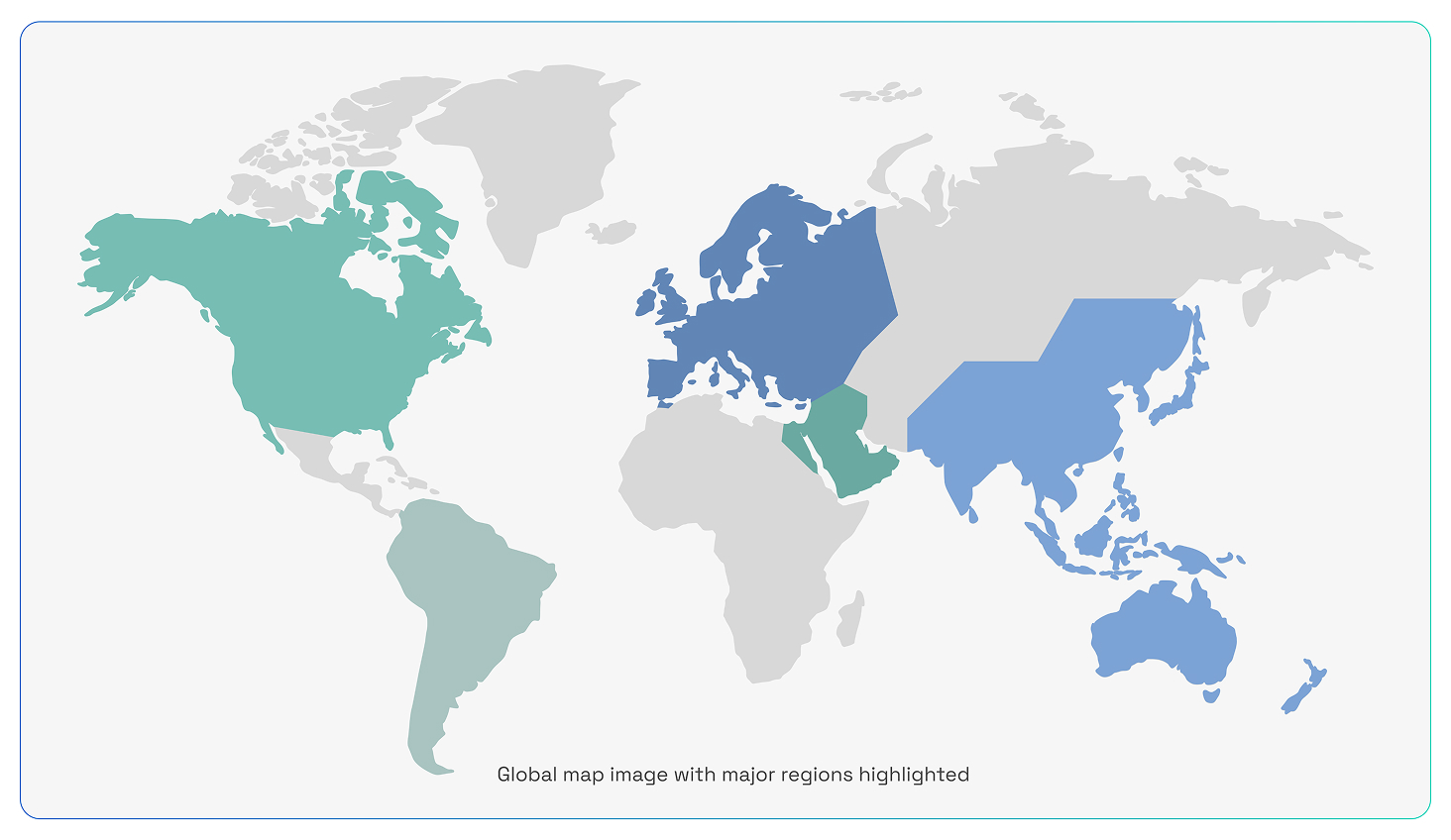
6. By Geography: North America (Dominant Region)
North America dominates the autonomous vehicle market.
Key factors:
- Presence of leading technology companies and startups
- High R&D investments
- Favorable regulatory environment for testing AVs
- Advanced digital and road infrastructure
Fastest-growing region:
- Asia-Pacific
Drivers: What is fueling market growth?
- Increasing demand for road safety and accident reduction
- Advancements in AI, machine learning, and sensor technologies
- Growth of connected vehicle ecosystems
- Rising investments by automotive and tech companies
- Expansion of smart city initiatives
Restraints (R) – What is limiting growth?
- High development and deployment costs
- Regulatory and legal uncertainties
- Cybersecurity and data privacy concerns
- Technical challenges in complex driving environments
Opportunities (O) – Where is future growth coming from?
- Expansion of robotaxi and autonomous mobility services
- Integration with electric vehicles (EVs)
- Growth in emerging markets
- Advancements in 5G and V2X communication
Trends (T) – What is shaping the future?
- Shift toward fully autonomous Level 4 and Level 5 vehicles
- Development of AI-powered driving systems
- Rise of autonomous delivery and logistics solutions
- Strategic collaborations between automotive and tech firms
Methodology
We use a stepwise research approach combining secondary research, primary validation, and data triangulation to estimate market size and forecast growth.
| Step | What we do |
|---|---|
| 1. Secondary research | Review public sources (company disclosures, industry publications, and credible datasets) to map the market and build baseline assumptions. |
| 2. Primary inputs | Validate assumptions through expert inputs (manufacturers, technology providers, and domain specialists). |
| 3. Sizing & forecasting | Apply structured sizing methods and forecast models using adoption trends, segment mix, and regional demand patterns. |
| 4. Triangulation | Cross-check estimates across multiple methods and sources to ensure consistency and reduce bias. |
Outlook of the Autonomous Driving Market
How Autonomous Driving Technologies Enable Safer, Smarter, and More Efficient Vehicle Operations
🚘 Key Applications
- Passenger Vehicles
- Commercial Vehicles & Trucks
- Ride-Hailing & Mobility Services
- Logistics & Delivery
- Public Transportation
📈 Business Benefits
- Improved Road Safety
- Reduced Traffic Congestion
- Fuel and Cost Efficiency
- Enhanced Mobility Services
- Integration with Smart City Infrastructure
Core Technologies
- LiDAR, Radar, and Camera Sensors
- Artificial Intelligence & Machine Learning
- Autonomous Vehicle Control Systems
- V2X Communication Networks
- High-Precision Mapping & Navigation Software
Market Scope & Analysis
1. By Level of Automation
- Level 1 (Driver Assistance)
- Level 2 (Partial Automation)
- Level 3 (Conditional Automation)
- Level 4 (High Automation)
- Level 5 (Full Automation)
2. By Component
- Hardware (Sensors, Cameras, Radar, LiDAR)
- Software
3. By Vehicle Type
- Passenger Vehicles
- Commercial Vehicles
4. By Application
- Personal Mobility
- Ride-Sharing / Robotaxis
- Logistics & Delivery
5. By Geography
- North America
- Europe
- Asia-Pacific
- Middle East & Africa
- Latin America
- Waymo
- Tesla
- General Motors
- Ford
- Baidu
- North America
- Europe
- Asia-Pacific
- Latin America
- Middle East
- Africa
- United States
- Canada
- Germany
- United Kingdom
- France
- China
- India
- Japan
- South Korea
- Australia
- Brazil
- Mexico
- United Arab Emirates
- Saudi Arabia
Recent Developments
Recent Developments
May 2025: A leading autonomous mobility provider began commercial pilot services in a major metropolitan area, offering driverless rideshares to the public.
November 2024: An autonomous tech firm partnered with a logistics company to deploy self‑driving delivery vehicles across a regional distribution network.
FAQ
A1: The global autonomous vehicle market is expected to expand at a CAGR of 11.8% from 2025 to 2035, driven by increasing deployment of automated transport solutions.
A2: Passenger transport, logistics, and shared mobility are driving the most growth within the autonomous vehicle market.
A3: The key players in Autonomous Vehicle Market are – Waymo, Tesla, General Motors, Ford, and Baidu.
A4: Legal frameworks, infrastructure readiness, and consumer acceptance challenge autonomous vehicle adoption.
A5: Autonomous vehicle market grows fastest in North America due to infrastructure and innovation hubs.
A6: The autonomous vehicle market serves urban mobility, logistics, public transportation, mining, and industrial operations.
GET A FREE SAMPLE
This FREE sample includes market data points, ranging from trend analyses to market estimates & forecasts. See for yourself.
NEED A CUSTOM REPORT?
We can customize every report including purchasing stand-alone sections or country-level reports, as well as <b> offer affordable discounts for start-ups & universities.</b>
Share this report:
Seize Tomorrow's Opportunities Today: Access the Full Report
Our Top Selling Reports
- •Water-Soluble Vitamin & Mineral Feed Supplements Market
- •Pyridine & Pyridine Derivatives Market
- •Nutraceutical Ingredients Market
- •Functional Food Ingredients Market
- •Water-Soluble Vitamin & Mineral Feed Supplements Market
- •Pyridine & Pyridine Derivatives Market
- •Nutraceutical Ingredients Market
- •Functional Food Ingredients Market
Personalize This Report
- •Triangulate with your Own Data
- •Get Data as per your Format and Definition
- •Gain a Deeper Dive on a Specific Application, Geography, Customer or Competitor
- •Any level of Personalization
Let Us Help You
- •What are the Known and Unknown Adjacencies Impacting the Digital Health Market
- •What will your New Revenue Sources be?
- •Who will be your Top Customer; what will make them switch?
- •Defend your Market Share or Win Competitors
- •Customized Workshop Request