3D Bioprinting Market 2025–2035: Innovation Drivers and Market Projections
GET A FREE SAMPLE
NEED A CUSTOM REPORT?
We can customize every report including purchasing stand-alone sections or country-level reports, as well as <b> offer affordable discounts for start-ups & universities.</b>
Share this report:




Introduction
Key Report Highlights
Dominant Segments
Competitive Intelligence
Strategic Insights
Regional Dynamics
Revolutionizing Manufacturing: Why Our Global 3D Printing Market Report is Essential for Industrial Innovation
The global 3D printing market is transforming traditional manufacturing by enabling rapid prototyping, customized production, and cost-efficient design processes. Also known as additive manufacturing, 3D printing is widely used across aerospace, healthcare, automotive, and industrial sectors. Our report provides deep insights into market trends, growth drivers, key segments, and emerging opportunities shaping the future of manufacturing.
1. By Component: Hardware (Dominant Segment)
The hardware segment holds the largest market share.
Why it dominates:
- High demand for 3D printers across industries
- Continuous innovation in printing technologies
- Industrial-scale adoption of additive manufacturing systems
- Expansion of desktop and industrial printers
2. By Technology: FDM (Fused Deposition Modeling) (Dominant Segment)
FDM technology leads the market.
Why:
- Cost-effective and widely accessible
- Easy material availability
- Suitable for prototyping and functional parts
- Strong adoption in education and industrial sectors
Other key technologies:
- SLA (Stereolithography)
- SLS (Selective Laser Sintering)
- Metal 3D printing (DMLS, EBM)
3. By Material: Plastics (Dominant Segment)
The plastics segment dominates material usage.
Why:
- Low cost and high availability
- Versatility in prototyping and production
- Wide compatibility with FDM printers
- Ease of processing and customization
4. By Application: Prototyping (Dominant Segment)
Rapid prototyping leads the market.
Why:
- Faster product development cycles
- Reduced design iteration costs
- Improved product innovation speed
- Widely used in R&D departments
Other key applications:
- Tooling and manufacturing
- Healthcare (prosthetics & implants)
- Aerospace components
- Automotive parts production
5. By End-User: Industrial Manufacturing (Dominant Segment)
Industrial manufacturing leads adoption of 3D printing technology.
Why:
- Demand for customized production
- Cost reduction in small-batch manufacturing
- Integration with Industry 4.0 systems
- Rapid tooling and design flexibility
6. By Geography: North America (Dominant Region)
North America holds the largest market share.
Key factors:
- Strong aerospace and automotive industries
- High R&D investment in additive manufacturing
- Presence of leading 3D printing companies
- Early adoption of industrial 3D technologies
Fastest-growing region:
- Asia-Pacific (China, Japan, India, South Korea)
Drivers: What is fueling market growth?
- Rising demand for mass customization
- Advancements in printing materials and technologies
- Growth of Industry 4.0 and smart manufacturing
- Reduced production waste and costs
- Increasing adoption in healthcare and aerospace
Restraints (R) – What is limiting growth?
- High cost of industrial 3D printers
- Limited material options for advanced applications
- Slow production speed for mass manufacturing
- Lack of skilled workforce
Opportunities (O) – Where is future growth coming from?
- Metal and bio-printing advancements
- Expansion in healthcare implants and prosthetics
- On-demand manufacturing models
- Integration with AI-driven design systems
Trends (T) – What is shaping the future?
- Industrial-scale additive manufacturing
- Multi-material 3D printing
- Digital supply chain transformation
- Hybrid manufacturing (3D + CNC)
Methodology
We use a stepwise research approach combining secondary research, primary validation, and data triangulation to estimate market size and forecast growth.
| Step | What we do |
|---|---|
| 1. Secondary research | Review public sources (company disclosures, industry publications, and credible datasets) to map the market and build baseline assumptions. |
| 2. Primary inputs | Validate assumptions through expert inputs (manufacturers, technology providers, and domain specialists). |
| 3. Sizing & forecasting | Apply structured sizing methods and forecast models using adoption trends, segment mix, and regional demand patterns. |
| 4. Triangulation | Cross-check estimates across multiple methods and sources to ensure consistency and reduce bias. |
Overview of the 3D Printing Market
How 3D printing technologies are transforming manufacturing, healthcare, aerospace, and automotive industries
🖨️ Key Applications
- Prototyping & Product Development
- Medical Implants & Prosthetics
- Aerospace & Automotive Components
- Consumer Goods & Electronics
- Construction & Industrial Tooling
📈 Business Benefits
- Reduced production costs and lead times
- Enhanced design flexibility and customization
- Minimized material waste and environmental impact
- Accelerated innovation and product iteration
- Support for distributed and on-demand manufacturing
Core Technologies
- Fused Deposition Modeling (FDM)
- Stereolithography (SLA) & Digital Light Processing (DLP)
- Selective Laser Sintering (SLS) & Selective Laser Melting (SLM)
- Metal & Ceramic 3D Printing
- 3D Printing Software & CAD Tools
Market Scope & Analysis
1. By Component
- Hardware
- Software
- Services
2. By Technology
- FDM (Fused Deposition Modeling)
- SLA (Stereolithography)
- SLS (Selective Laser Sintering)
- Metal 3D Printing
3. By Material
- Plastics
- Metals
- Ceramics
- Bio-materials
4. By Application
- Prototyping
- Tooling
- Healthcare
- Aerospace
- Automotive
5. By End-User
- Industrial Manufacturing
- Healthcare
- Aerospace & Defense
- Automotive
- Education & Research
6. By Geography
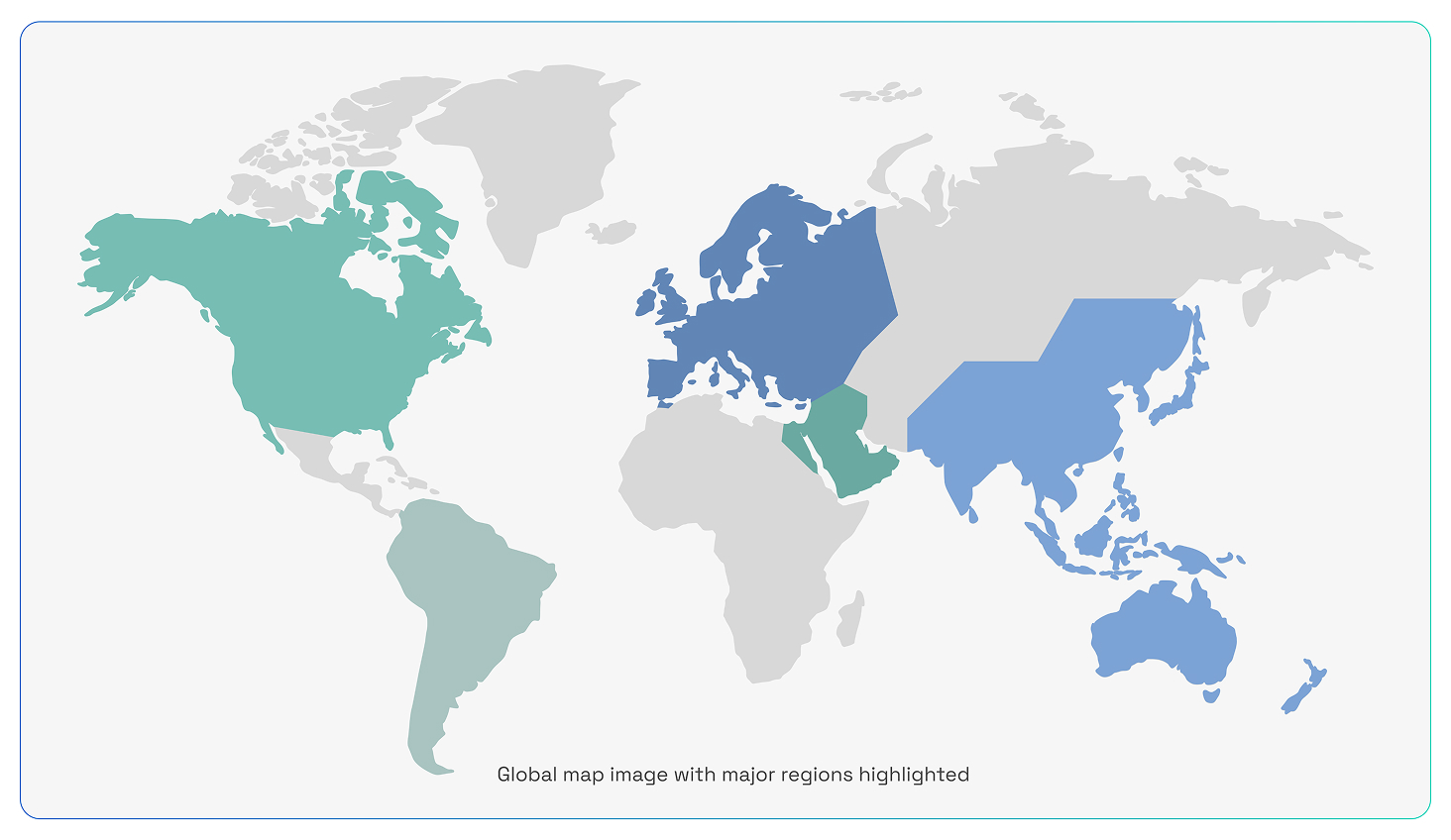
- North America
- Europe
- Asia-Pacific
- Latin America
- Middle East & Africa
- BICO Group AB (CELLINK)
- 3D Systems Inc.
- Organovo Holdings Inc.
- Merck KGaA
- CollPlant Biotechnologies Ltd.
- Aspect Biosystems Ltd.
- North America
- Europe
- Asia-Pacific
- Latin America
- Middle East
- Africa
- United States
- Canada
- Germany
- United Kingdom
- France
- China
- India
- Japan
- South Korea
- Australia
- Brazil
- Mexico
- United Arab Emirates
- Saudi Arabia
Recent Developments
Recent Developments
May 2025: Adidas introduced the Climacool, a fully 3D‑printed athletic shoe featuring a breathable lattice structure, marking a major expansion of additive manufacturing into consumer products and demonstrating the market’s shift toward customizable and sustainable manufacturing.
May 2025 – Ricoh debuted a new 3D inkjet printer capable of producing high‑strength, full‑color resin components with excellent surface finish and biocompatibility — boosting adoption in healthcare, dental, and design markets.
Frequently Asked Questions
A1: 3D Bioprinting Market expects a CAGR of 12.6% from 2025 to 2035.
A2: The 3D Bioprinting Market is primarily driven by applications in tissue engineering, regenerative medicine, drug testing and development, organ and organoid fabrication, and personalized medicine.
A3: Key players in the 3D Bioprinting Market include Organovo Holdings, CELLINK (now part of BICO Group), RegenHU, 3D Systems, EnvisionTEC (part of Desktop Metal), Allevi (by 3D Bioprinting Solutions), Aspect Biosystems, Poietis, and TeVido BioDevices — companies offering bioprinting platforms, bioinks, and related tissue engineering technologies.
A4: The main challenges hindering 3D bioprinting adoption include high costs, limited biomaterial options, technical complexity, scalability issues, regulatory hurdles, ethical concerns, and ensuring reproducibility and functionality of printed tissues or organs.
A5: The Autoinjectors market is expected to see fastest growth in North America and Europe, supported by rising self-administration therapies and chronic disease prevalence.
A6: 3D Bioprinting Market verticals include research institutions, pharmaceutical companies, and healthcare providers using bioprinters for tissue engineering, organ models, and drug testing.
GET A FREE SAMPLE
This FREE sample includes market data points, ranging from trend analyses to market estimates & forecasts. See for yourself.
NEED A CUSTOM REPORT?
We can customize every report including purchasing stand-alone sections or country-level reports, as well as <b> offer affordable discounts for start-ups & universities.</b>
Share this report:
Seize Tomorrow's Opportunities Today: Access the Full Report
Our Top Selling Reports
- •Water-Soluble Vitamin & Mineral Feed Supplements Market
- •Pyridine & Pyridine Derivatives Market
- •Nutraceutical Ingredients Market
- •Functional Food Ingredients Market
- •Water-Soluble Vitamin & Mineral Feed Supplements Market
- •Pyridine & Pyridine Derivatives Market
- •Nutraceutical Ingredients Market
- •Functional Food Ingredients Market
Personalize This Report
- •Triangulate with your Own Data
- •Get Data as per your Format and Definition
- •Gain a Deeper Dive on a Specific Application, Geography, Customer or Competitor
- •Any level of Personalization
Let Us Help You
- •What are the Known and Unknown Adjacencies Impacting the Digital Health Market
- •What will your New Revenue Sources be?
- •Who will be your Top Customer; what will make them switch?
- •Defend your Market Share or Win Competitors
- •Customized Workshop Request