
Life Science Analytics Market 2025–2035: Market Size, Competitive Dynamics, and Forecast
GET A FREE SAMPLE
NEED A CUSTOM REPORT?
We can customize every report including purchasing stand-alone sections or country-level reports, as well as <b> offer affordable discounts for start-ups & universities.</b>
Share this report:




Introduction
Key Report Highlights
Dominant Segments
Competitive Intelligence
Strategic Insights
Regional Dynamics
Unlocking Data-Driven Discovery: Why Our Global Life Science Analytics Market Report is Essential for Biopharma Innovation
The global life science analytics market is transforming the pharmaceutical, biotechnology, and healthcare research landscape by enabling data-driven decision-making across drug discovery, clinical trials, and commercial operations. With the rapid growth of real-world data, AI integration, and precision medicine, analytics has become a core pillar of life sciences innovation. Our report delivers deep insights into market trends, growth drivers, competitive landscape, and emerging opportunities shaping the future of healthcare analytics.
1. By Component: Software (Dominant Segment)
The software segment holds the largest market share.
Why it dominates:
- High demand for advanced analytics platforms
- Widespread adoption of AI/ML-based tools
- Use in clinical trials and drug development
- Integration with real-world data systems
Life science organizations rely on analytics software to improve research efficiency and outcomes.
2. By Type: Predictive Analytics (Dominant Segment)
Predictive analytics leads the market.
Why:
- Improves drug discovery success rates
- Enables early identification of trial outcomes
- Reduces R&D costs and timelines
- Supports precision medicine initiatives
3. By Deployment Mode: Cloud-Based (Dominant)
The cloud-based deployment model leads adoption.
Reasons:
- Scalable data processing for large datasets
- Real-time collaboration across global teams
- Cost-effective infrastructure
- Secure data sharing across research networks
4. By Organization Size: Large Enterprises (Dominant)
Large enterprises account for the highest adoption of life science analytics solutions.
Why:
- High R&D investment capacity
- Complex clinical trial operations
- Large-scale data generation
- Strong regulatory compliance requirements
Growth insight:
SMEs and biotech startups are rapidly adopting cloud-based analytics platforms.
5. By Application: Clinical Research (Dominant Segment)
Clinical research analytics is the leading application area.
Why:
- Optimization of clinical trial design
- Real-time patient data analysis
- Regulatory reporting and compliance
- Improved trial efficiency and success rates
Other key applications:
- Drug discovery and development
- Pharmacovigilance
- Sales and marketing analytics
- Supply chain analytics
6. By End-User: Pharmaceutical & Biotechnology Companies (Dominant Segment)
The pharmaceutical and biotechnology sector leads the market.
Reasons:
- High dependence on data-driven R&D
- Need for faster drug approval processes
- Regulatory compliance requirements
- Large-scale clinical trial operations
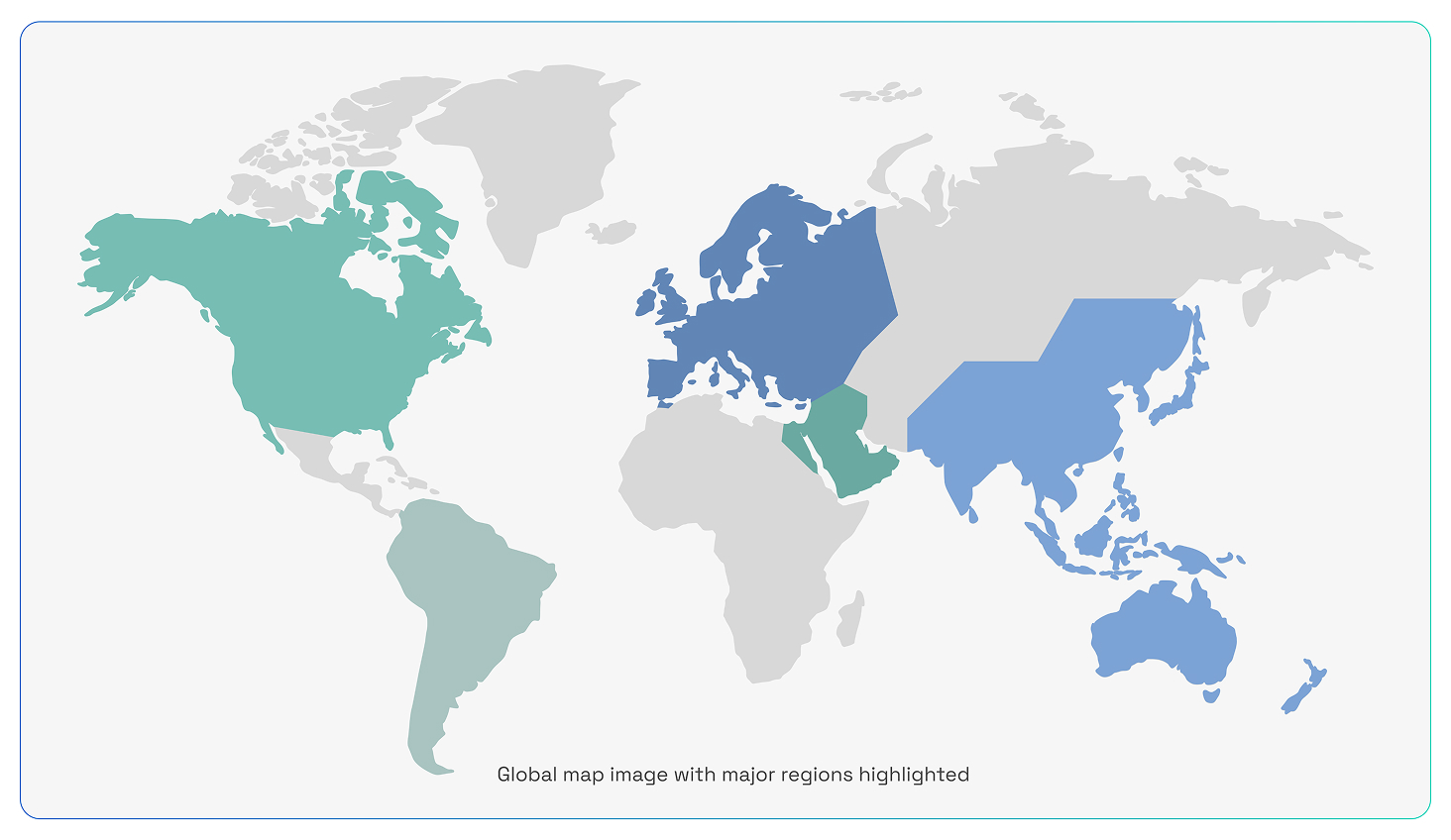
7. By Geography: North America (Dominant Region)
North America holds the largest market share.
Key factors:
- Advanced healthcare and research infrastructure
- Strong presence of biopharma companies
- Early adoption of AI and analytics technologies
- High R&D expenditure
Fastest-growing region:
- Asia-Pacific (India, China, Japan, South Korea)
Drivers: What is fueling market growth?
- Explosion of healthcare and clinical data
- Growth of precision medicine
- Increasing adoption of AI/ML in life sciences
- Demand for faster drug development
- Expansion of real-world evidence (RWE)
Restraints (R) – What is limiting growth?
- Data privacy and regulatory challenges
- High implementation costs
- Complex data integration across systems
- Lack of skilled data science professionals
Opportunities (O) – Where is future growth coming from?
- AI-driven drug discovery platforms
- Expansion of real-world data analytics
- Cloud-based life science ecosystems
- Personalized medicine and genomics analytics
Trends (T) – What is shaping the future?
- AI-powered clinical trial optimization
- Integration of genomics and analytics
- Real-world evidence (RWE) adoption
- Automated regulatory reporting systems
Methodology
We use a stepwise research approach combining secondary research, primary validation, and data triangulation to estimate market size and forecast growth.
| Step | What we do |
|---|---|
| 1. Secondary research | Review public sources (company disclosures, industry publications, and credible datasets) to map the market and build baseline assumptions. |
| 2. Primary inputs | Validate assumptions through expert inputs (manufacturers, technology providers, and domain specialists). |
| 3. Sizing & forecasting | Apply structured sizing methods and forecast models using adoption trends, segment mix, and regional demand patterns. |
| 4. Triangulation | Cross-check estimates across multiple methods and sources to ensure consistency and reduce bias. |
Snapshot of the Life Science Analytics Market
How life science analytics solutions are driving data-driven research, clinical decision-making, and operational efficiency in healthcare and biotechnology
🔬 Key Applications
- Clinical Trial Data Analysis
- Genomics & Proteomics Research
- Drug Discovery & Development
- Patient & Population Health Analytics
- Regulatory Compliance Reporting
📈 Business Benefits
- Accelerated research and drug development timelines
- Improved decision-making in clinical and operational processes
- Enhanced data accuracy and predictive insights
- Reduced costs through optimized workflows
- Support for precision medicine and personalized therapies
Core Technologies
- Big Data Analytics & AI Algorithms
- Cloud-Based Data Management Platforms
- Bioinformatics & Computational Biology Tools
- Machine Learning for Predictive Modeling
- Data Integration & Visualization Solutions
Market Scope & Analysis
1. By Component
- Software
- Services
2. By Type
- Descriptive Analytics
- Diagnostic Analytics
- Predictive Analytics
- Prescriptive Analytics
3. By Deployment Mode
- Cloud-Based
- On-Premises
4. By Application
- Clinical Research
- Drug Discovery
- Pharmacovigilance
- Sales & Marketing Analytics
- Supply Chain Analytics
5. By End-User
- Pharmaceutical Companies
- Biotechnology Companies
- Contract Research Organizations (CROs)
- Healthcare Providers
6. By Geography
- North America
- Europe
- Asia-Pacific
- Latin America
- Middle East & Africa
- Oracle Corporation
- IQVIA
- SAS Institute Inc.
- Accenture
- Cognizant
- IBM Corporation
- Wipro Limited
- Optum
- North America
- Europe
- Asia-Pacific
- Latin America
- Middle East
- Africa
- United States
- Canada
- Germany
- United Kingdom
- France
- China
- India
- Japan
- South Korea
- Australia
- Brazil
- Mexico
- United Arab Emirates
- Saudi Arabia
Recent Developments
Recent Developments
March, 2025: IQVIA launched Site Lab Navigator, a new solution to automate and optimize lab workflows for clinical trial sponsors and investigative sites, enhancing operational efficiency.
Frequently Asked Questions
A1: Life Science Analytics Market expects a CAGR of 11.3% from 2025 to 2035.
A2: The Life Science Analytics Market is driven mainly by applications in drug discovery and development, clinical trial analytics, genomics and proteomics analysis, real-world evidence generation, and personalized medicine.
A3: Key players in the Life Science Analytics Market include IQVIA, SAS Institute, Oracle Health Sciences, SAS Institute, SAP SE, IBM Watson Health, PerkinElmer, and Thermo Fisher Scientific.
A4: The main challenges hindering the adoption of Life Science Analytics include high implementation costs, complexity of integrating diverse data sources, data privacy and security concerns, shortage of skilled analytics professionals, regulatory compliance challenges, resistance to adopting new technologies in traditional workflows, and lack of standardized data formats across platforms.
A5: The Life Science Analytics market is expected to grow rapidly in North America and Asia-Pacific, driven by pharmaceutical R&D and biotechnology expansion.
A6: Life Science Analytics verticals include pharmaceutical, biotech, CROs, and research institutes using analytics for drug discovery, clinical trials, genomics, and regulatory compliance.
GET A FREE SAMPLE
This FREE sample includes market data points, ranging from trend analyses to market estimates & forecasts. See for yourself.
NEED A CUSTOM REPORT?
We can customize every report including purchasing stand-alone sections or country-level reports, as well as <b> offer affordable discounts for start-ups & universities.</b>
Share this report:
Seize Tomorrow's Opportunities Today: Access the Full Report
Our Top Selling Reports
- •Water-Soluble Vitamin & Mineral Feed Supplements Market
- •Pyridine & Pyridine Derivatives Market
- •Nutraceutical Ingredients Market
- •Functional Food Ingredients Market
- •Water-Soluble Vitamin & Mineral Feed Supplements Market
- •Pyridine & Pyridine Derivatives Market
- •Nutraceutical Ingredients Market
- •Functional Food Ingredients Market
Personalize This Report
- •Triangulate with your Own Data
- •Get Data as per your Format and Definition
- •Gain a Deeper Dive on a Specific Application, Geography, Customer or Competitor
- •Any level of Personalization
Let Us Help You
- •What are the Known and Unknown Adjacencies Impacting the Digital Health Market
- •What will your New Revenue Sources be?
- •Who will be your Top Customer; what will make them switch?
- •Defend your Market Share or Win Competitors
- •Customized Workshop Request