
Electric Commercial Vehicle Market 2025–2035: Key Segments, Growth Trends, and Risk Analysis
GET A FREE SAMPLE
NEED A CUSTOM REPORT?
We can customize every report including purchasing stand-alone sections or country-level reports, as well as <b> offer affordable discounts for start-ups & universities.</b>
Share this report:




Introduction
Key Report Highlights
Dominant Segments
Competitive Intelligence
Strategic Insights
Regional Dynamics
Accelerating Electrification, Emission Regulations & Fleet Decarbonization: Why the Electric Commercial Vehicle Market is Reshaping Global Transportation
The global electric commercial vehicle market is witnessing rapid expansion, driven by strict emission regulations, rising fuel costs, and increasing focus on sustainable transportation solutions. Electric commercial vehicles (e-CVs) include electric trucks, vans, buses, and other utility vehicles powered fully or partially by electric drivetrains.
Governments, logistics companies, and fleet operators are increasingly shifting toward electrified fleets to reduce carbon emissions and operational costs. Advancements in battery technology, charging infrastructure, and powertrain efficiency are making electric commercial vehicles more viable for long-haul and urban applications.
1. By Vehicle Type: Electric Light Commercial Vehicles (e-LCVs) (Dominant Segment)
Electric light commercial vehicles dominate the market.
Why it dominates:
- High adoption in last-mile delivery and e-commerce logistics
- Lower operating and maintenance costs
- Suitable for short-distance urban transport
- Strong demand from fleet operators and delivery companies
2. By Vehicle Type: Electric Heavy Commercial Vehicles (e-HCVs)
Electric heavy commercial vehicles are an emerging segment.
Why:
- Used in freight and long-haul transportation
- Growing investment in high-capacity battery systems
- Rising demand for zero-emission logistics
- Still in early stages due to infrastructure challenges
3. By Propulsion Type: Battery Electric Vehicles (BEVs) (Dominant Segment)
Battery Electric Vehicles (BEVs) lead the market.
Why:
- Fully electric operation with zero tailpipe emissions
- Improved battery efficiency and range
- Strong government incentives and subsidies
- Widespread adoption in urban fleets
4. By Propulsion Type: Plug-in Hybrid Electric Vehicles (PHEVs)
PHEVs are widely used as transitional solutions.
Why:
- Combination of electric and internal combustion engine
- Reduced range anxiety for operators
- Flexible usage for long-distance operations
- Lower emissions compared to conventional vehicles
5. By Application: Logistics & Delivery (Dominant Segment)
Logistics and delivery is the leading application area.
Key factors:
- Rapid growth of e-commerce and last-mile delivery
- Increasing demand for sustainable fleet solutions
- Urban emission restrictions driving electrification
- Cost savings in fuel and maintenance
Fastest-growing segment:
- Public transportation (electric buses)
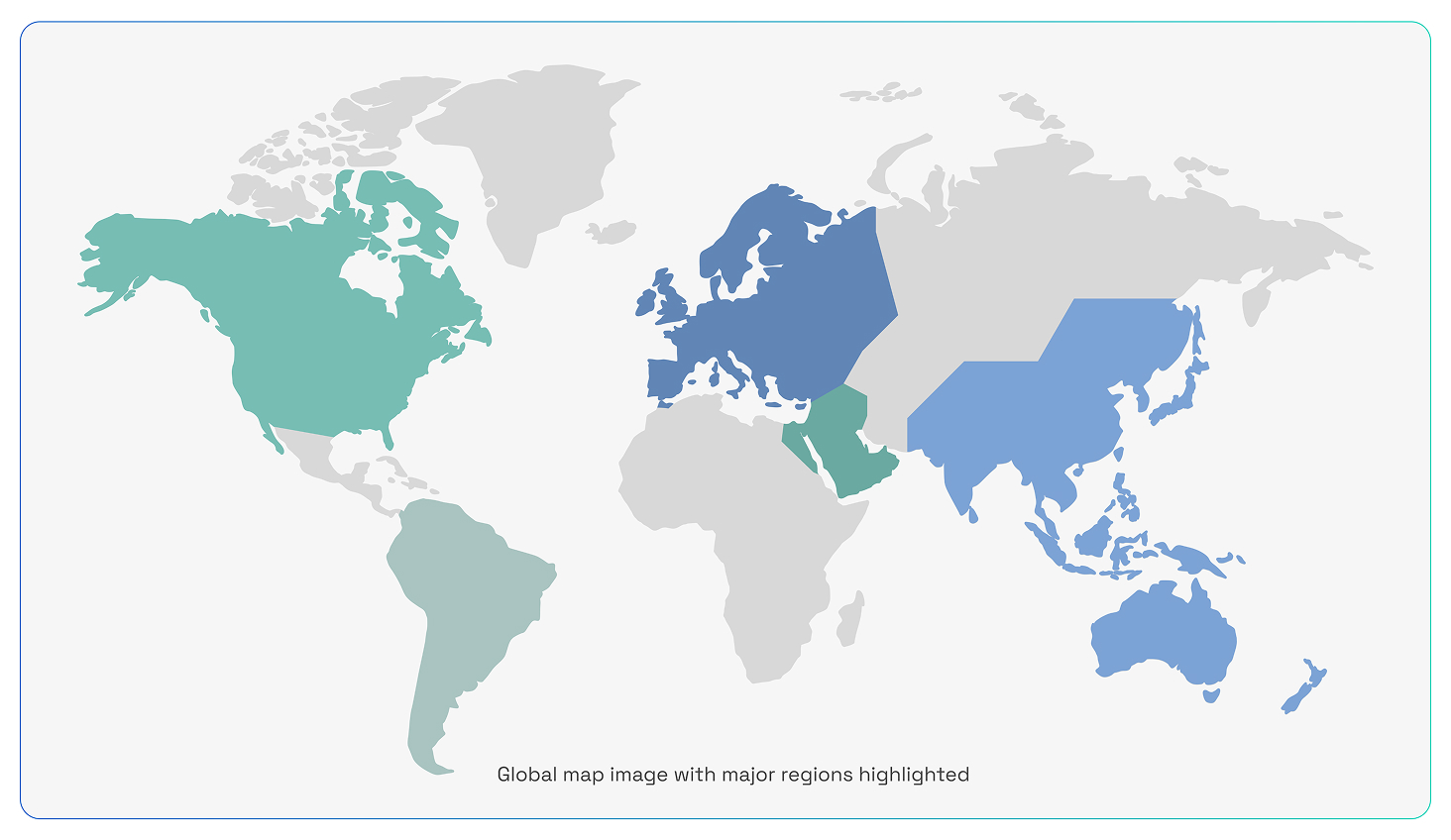
6. By Geography: Asia-Pacific (Dominant Region)
Asia-Pacific leads the electric commercial vehicle market.
Key factors:
- Strong government support for electric mobility
- Large-scale manufacturing of EV components
- Rapid urbanization and logistics expansion
- High adoption in countries like China and India
Fastest-growing region:
- Europe
Drivers: What is fueling market growth?
- Strict global emission regulations and sustainability targets
- Rising fuel prices and demand for cost-efficient transport
- Government incentives and subsidies for EV adoption
- Advancements in battery technology and charging infrastructure
- Growth of e-commerce and logistics industries
Restraints (R) – What is limiting growth?
- High upfront cost of electric commercial vehicles
- Limited charging infrastructure in developing regions
- Battery range limitations for heavy-duty operations
- Long charging times compared to refueling
Opportunities (O) – Where is future growth coming from?
- Expansion of fast-charging and battery-swapping networks
- Growth of electric freight and logistics fleets
- Development of high-capacity batteries for heavy trucks
- Integration with smart fleet management systems
Trends (T) – What is shaping the future?
- Rapid electrification of last-mile delivery fleets
- Shift toward zero-emission urban logistics
- Increasing adoption of connected electric fleets
- Advancements in autonomous electric commercial vehicles
Methodology
We use a stepwise research approach combining secondary research, primary validation, and data triangulation to estimate market size and forecast growth.
| Step | What we do |
|---|---|
| 1. Secondary research | Review public sources (company disclosures, industry publications, and credible datasets) to map the market and build baseline assumptions. |
| 2. Primary inputs | Validate assumptions through expert inputs (manufacturers, technology providers, and domain specialists). |
| 3. Sizing & forecasting | Apply structured sizing methods and forecast models using adoption trends, segment mix, and regional demand patterns. |
| 4. Triangulation | Cross-check estimates across multiple methods and sources to ensure consistency and reduce bias. |
Outlook of the Electric Vehicle Chargers Market
How EV Chargers Enable Widespread Electric Vehicle Adoption and Efficient Energy Delivery
⚡ Key Applications
- Residential EV Charging Stations
- Commercial & Workplace Chargers
- Public & Fast-Charging Networks
- Fleet Charging Solutions
- Integrated Smart Charging Systems
📈 Business Benefits
- Supports EV Adoption & Market Growth
- Revenue from Charging Services
- Integration with Renewable Energy Sources
- Enhances Customer Convenience
- Enables Smart Grid & Energy Management
Core Technologies
- AC and DC Fast Chargers
- Battery Management & Safety Systems
- Smart Charging & Load Management
- IoT & Connectivity for Usage Monitoring
- Payment & Energy Billing Systems
Market Scope & Analysis
1. By Vehicle Type
- Electric Light Commercial Vehicles (e-LCVs)
- Electric Medium Commercial Vehicles (e-MCVs)
- Electric Heavy Commercial Vehicles (e-HCVs)
- Electric Buses
2. By Propulsion Type
- Battery Electric Vehicles (BEVs)
- Plug-in Hybrid Electric Vehicles (PHEVs)
- Fuel Cell Electric Vehicles (FCEVs)
3. By Battery Type
- Lithium-ion Batteries
- Solid-state Batteries
- Nickel Metal Hydride Batteries
4. By Application
- Logistics & Delivery
- Public Transport
- Construction & Mining
- Municipal Services
5. By Geography
- Asia-Pacific
- Europe
- North America
- Latin America
- Middle East & Africa
- BYD
- Daimler Truck
- Volvo Group
- Tata Motors
- Rivian
- North America
- Europe
- Asia-Pacific
- Latin America
- Middle East
- Africa
- United States
- Canada
- Germany
- United Kingdom
- France
- China
- India
- Japan
- South Korea
- Australia
- Brazil
- Mexico
- United Arab Emirates
- Saudi Arabia
Recent Developments
Recent Developments
May 2025: A commercial EV manufacturer secured a large order from a national delivery fleet to supply electric vans and trucks for urban operations.
November 2024: A city transport authority partnered with an EV maker to electrify its bus fleet under a sustainability initiative.
FAQ
A1: The global electric commercial vehicle market is expected to grow at a CAGR of 19.0% between 2025 and 2035, reflecting electrification of fleet transport.
A2: Urban logistics, fleet electrification, and last-mile delivery are accelerating expansion in the electric commercial vehicle market.
A3: The key players in Electric Commercial Vehicle Market are – BYD, Daimler Truck, Volvo Group, Tata Motors, and Rivian.
A4: Battery cost, charging infrastructure, and limited range restrict electric commercial vehicle adoption.
A5: Electric commercial vehicle market expands rapidly in Europe with focus on emission reductions and green logistics.
A6: Electric commercial vehicle market verticals are last-mile delivery, logistics fleets, public transportation, waste management, and refrigerated transport.
GET A FREE SAMPLE
This FREE sample includes market data points, ranging from trend analyses to market estimates & forecasts. See for yourself.
NEED A CUSTOM REPORT?
We can customize every report including purchasing stand-alone sections or country-level reports, as well as <b> offer affordable discounts for start-ups & universities.</b>
Share this report:
Seize Tomorrow's Opportunities Today: Access the Full Report
Our Top Selling Reports
- •Water-Soluble Vitamin & Mineral Feed Supplements Market
- •Pyridine & Pyridine Derivatives Market
- •Nutraceutical Ingredients Market
- •Functional Food Ingredients Market
- •Water-Soluble Vitamin & Mineral Feed Supplements Market
- •Pyridine & Pyridine Derivatives Market
- •Nutraceutical Ingredients Market
- •Functional Food Ingredients Market
Personalize This Report
- •Triangulate with your Own Data
- •Get Data as per your Format and Definition
- •Gain a Deeper Dive on a Specific Application, Geography, Customer or Competitor
- •Any level of Personalization
Let Us Help You
- •What are the Known and Unknown Adjacencies Impacting the Digital Health Market
- •What will your New Revenue Sources be?
- •Who will be your Top Customer; what will make them switch?
- •Defend your Market Share or Win Competitors
- •Customized Workshop Request