
Active Pharmaceutical Ingredient Market 2025-2035: Market Size and Growth Insights
GET A FREE SAMPLE
NEED A CUSTOM REPORT?
We can customize every report including purchasing stand-alone sections or country-level reports, as well as <b> offer affordable discounts for start-ups & universities.</b>
Share this report:




Introduction
Key Report Highlights
Dominant Segments
Competitive Intelligence
Strategic Insights
Regional Dynamics
Powering Drug Development: Why Our Global Active Pharmaceutical Ingredients (API) Market Report is Essential for the Pharmaceutical Industry
The global Active Pharmaceutical Ingredients (API) market plays a critical role in the pharmaceutical value chain, forming the biologically active components in drugs that produce therapeutic effects. With increasing demand for generic medicines, rising prevalence of chronic diseases, and growth in pharmaceutical R&D, the API market is witnessing significant expansion. Our report offers comprehensive insights into market trends, segmentation, growth drivers, and future opportunities shaping the global pharmaceutical landscape.
1. By Type: Synthetic APIs (Dominant Segment)
The synthetic APIs segment holds the largest market share.
Why it dominates:
- Established manufacturing processes
- Cost-effective production at scale
- Wide use across multiple therapeutic areas
- High stability and longer shelf life
Other key type:
- Biotech APIs (biologics)
2. By Manufacturer Type: Captive APIs (Dominant Segment)
Captive manufacturing leads the market.
Reasons:
- Better quality control and regulatory compliance
- Integrated pharmaceutical operations
- Reduced dependency on third-party suppliers
- Protection of proprietary drug formulations
Other key type:
- Merchant APIs
3. By Synthesis Type: Chemical Synthesis (Dominant Segment)
Chemical synthesis dominates API production.
Why:
- Widely used in traditional drug manufacturing
- Scalable and cost-efficient processes
- Suitable for a broad range of drugs
- Established industrial infrastructure
Other key type:
- Biotechnological synthesis
4. By Application: Cardiovascular Diseases (Dominant Segment)
Cardiovascular diseases account for the largest share.
Why:
- High global disease burden
- Long-term medication requirements
- Growing aging population
- Increasing lifestyle-related health issues
Other key applications:
- Oncology
- Diabetes
- Neurological disorders
- Respiratory diseases
5. By End-User: Pharmaceutical Companies (Dominant Segment)
Pharmaceutical companies are the largest end-users.
Why:
- High demand for API integration in drug manufacturing
- Continuous drug development and innovation
- Large-scale production capabilities
- Regulatory compliance requirements
Other key end-users:
- Biotechnology companies
- Contract manufacturing organizations (CMOs)
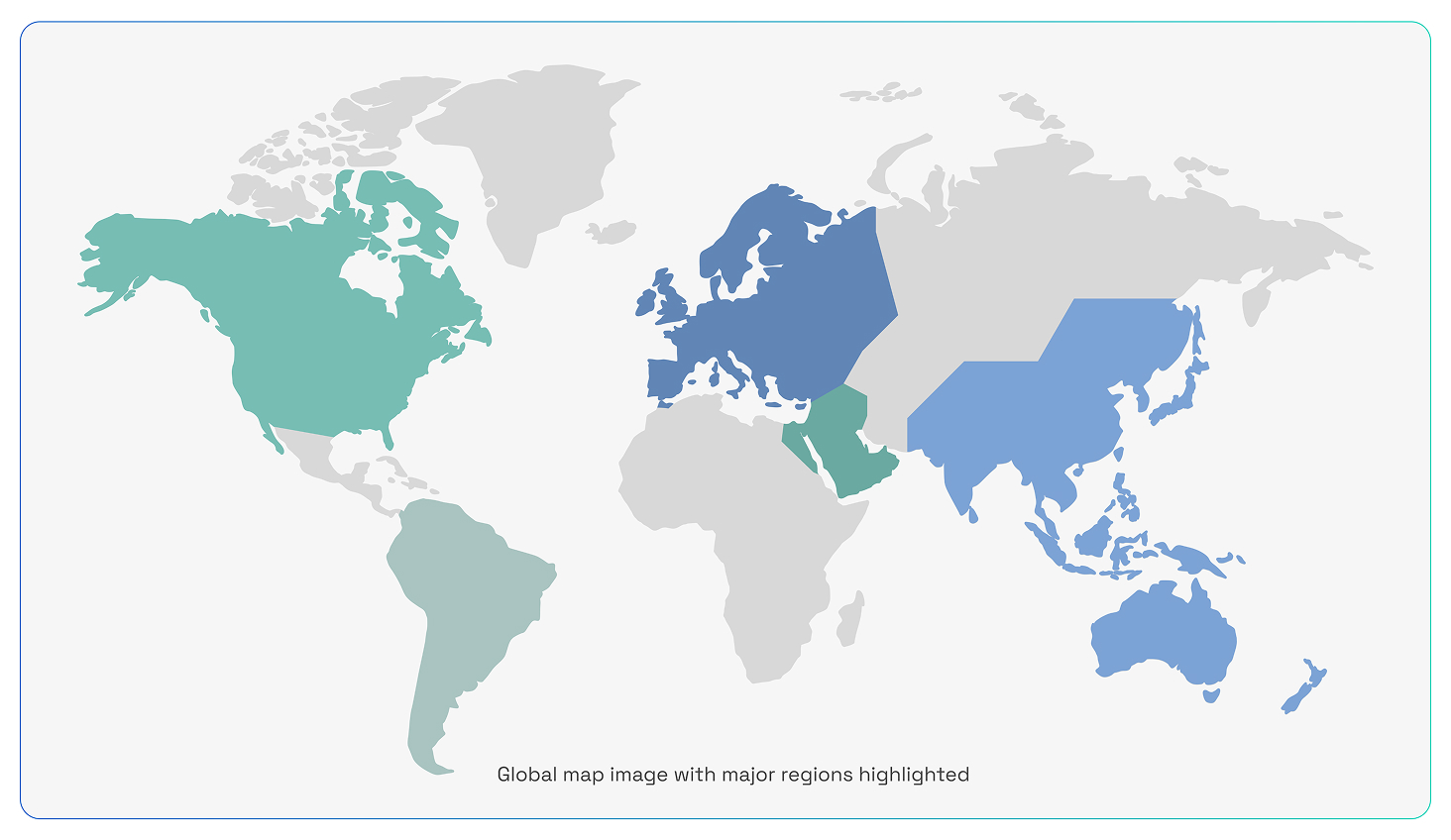
6. By Geography: Asia-Pacific (Dominant Region)
Asia-Pacific holds the largest market share.
Key factors:
- Cost-effective manufacturing in countries like India and China
- Strong presence of API producers
- Favorable government policies
- Growing pharmaceutical industry
Fastest-growing region:
- North America
Drivers: What is fueling market growth?
- Rising demand for generic drugs
- Increasing prevalence of chronic diseases
- Growth in pharmaceutical R&D
- Patent expirations of branded drugs
- Expansion of global healthcare access
Restraints (R) – What is limiting growth?
- Stringent regulatory requirements
- High manufacturing and compliance costs
- Supply chain disruptions
- Environmental concerns in chemical synthesis
Opportunities (O) – Where is future growth coming from?
- Growth of biologics and biosimilars
- Expansion in emerging markets
- Outsourcing to contract manufacturers
- Advancements in green chemistry
Trends (T) – What is shaping the future?
- Shift toward high-potency APIs (HPAPIs)
- Increased adoption of continuous manufacturing
- Rising focus on biologics
- Digitalization in pharmaceutical manufacturing
Methodology
We use a stepwise research approach combining secondary research, primary validation, and data triangulation to estimate market size and forecast growth.
| Step | What we do |
|---|---|
| 1. Secondary research | Review public sources (company disclosures, industry publications, and credible datasets) to map the market and build baseline assumptions. |
| 2. Primary inputs | Validate assumptions through expert inputs (manufacturers, technology providers, and domain specialists). |
| 3. Sizing & forecasting | Apply structured sizing methods and forecast models using adoption trends, segment mix, and regional demand patterns. |
| 4. Triangulation | Cross-check estimates across multiple methods and sources to ensure consistency and reduce bias. |
Snapshot of the Active Pharmaceutical Ingredients (API) Market
How active pharmaceutical ingredients are driving drug development, manufacturing, and therapeutic innovations globally
💊 Key Applications
- Prescription Pharmaceuticals
- Over-the-Counter (OTC) Drugs
- Biopharmaceuticals & Biosimilars
- Veterinary Drugs
- Specialty & Generic Medications
📈 Business Benefits
- Enables formulation of safe and effective medications
- Supports regulatory compliance and quality assurance
- Drives innovation in drug development and therapies
- Optimizes production efficiency and cost management
- Expands market reach for generics and specialty drugs
Core Technologies
- Chemical Synthesis & Fermentation Processes
- High-Purity API Manufacturing
- Process Optimization & Scale-Up Technologies
- Analytical & Quality Control Platforms
- Continuous Manufacturing & Automation Solutions
Market Scope & Analysis
1. By Type
- Synthetic APIs
- Biotech APIs (Biologics)
2. By Manufacturer Type
- Captive APIs
- Merchant APIs
3. By Synthesis Type
- Chemical Synthesis
- Biotechnological Synthesis
4. By Application
- Cardiovascular Diseases
- Oncology
- Diabetes
- Neurological Disorders
- Respiratory Diseases
5. By End-User
- Pharmaceutical Companies
- Biotechnology Companies
- Contract Manufacturing Organizations (CMOs)
6. By Geography
- Asia-Pacific
- North America
- Europe
- Latin America
- Middle East & Africa
- Pfizer (upstream partners)
- Teva Pharmaceutical Industries
- BASF
- Lonza
- Cipla
- Dr. Reddy’s Laboratories
- North America
- Europe
- Asia-Pacific
- Latin America
- Middle East
- Africa
- United States
- Canada
- Germany
- United Kingdom
- France
- China
- India
- Japan
- South Korea
- Australia
- Brazil
- Mexico
- United Arab Emirates
- Saudi Arabia
Recent Developments
Recent Developments
Feb 2026: AbbVie announced a US $380 million investment to build new API manufacturing facilities in Illinois, incorporating advanced technologies and AI capabilities, with operations expected by 2029.
Late 2025: Indian API makers such as Divi’s Laboratories reported stronger profitability in late 2025, driven by demand from global drug companies seeking diversified supply chains.
Frequently Asked Questions
A1: Active Pharmaceutical Ingredient Market expects a CAGR of 5.9% from 2025 to 2035.
A2: The Active Pharmaceutical Ingredient Market is primarily driven by applications in generic drug manufacturing, branded drug production, biotechnology-derived therapeutics, over-the-counter (OTC) medications, and contract manufacturing for pharmaceutical companies.
A3: Key players in the Active Pharmaceutical Ingredient Market include Pfizer Inc., Novartis AG, Teva Pharmaceutical Industries Ltd., Sanofi S.A., BASF SE, Cipla Ltd., Dr. Reddy’s Laboratories, Sun Pharmaceutical Industries, and Lupin Limited — major manufacturers and suppliers of APIs for global pharmaceutical production.
A4: The main challenges hindering Active Pharmaceutical Ingredient (API) adoption are high production costs, complex regulatory compliance, supply chain disruptions, quality control issues, stringent safety standards, intellectual property concerns, and limited availability of raw materials.
A5: Asia‑Pacific is expected to see the fastest growth in the Active Pharmaceutical Ingredient (API) market, driven by cost‑effective manufacturing hubs in countries like China and India, expanding pharmaceutical production capabilities, and rising global export demand.
A6: Active Pharmaceutical Ingredient verticals include pharmaceutical companies and contract manufacturers producing synthetic, biotech, or natural APIs for various therapeutic areas.
GET A FREE SAMPLE
This FREE sample includes market data points, ranging from trend analyses to market estimates & forecasts. See for yourself.
NEED A CUSTOM REPORT?
We can customize every report including purchasing stand-alone sections or country-level reports, as well as <b> offer affordable discounts for start-ups & universities.</b>
Share this report:
Seize Tomorrow's Opportunities Today: Access the Full Report
Our Top Selling Reports
- •Water-Soluble Vitamin & Mineral Feed Supplements Market
- •Pyridine & Pyridine Derivatives Market
- •Nutraceutical Ingredients Market
- •Functional Food Ingredients Market
- •Water-Soluble Vitamin & Mineral Feed Supplements Market
- •Pyridine & Pyridine Derivatives Market
- •Nutraceutical Ingredients Market
- •Functional Food Ingredients Market
Personalize This Report
- •Triangulate with your Own Data
- •Get Data as per your Format and Definition
- •Gain a Deeper Dive on a Specific Application, Geography, Customer or Competitor
- •Any level of Personalization
Let Us Help You
- •What are the Known and Unknown Adjacencies Impacting the Digital Health Market
- •What will your New Revenue Sources be?
- •Who will be your Top Customer; what will make them switch?
- •Defend your Market Share or Win Competitors
- •Customized Workshop Request