
The District Cooling Market 2025–2035: Demand Trends, Regulatory Impact, and Forecast
GET A FREE SAMPLE
NEED A CUSTOM REPORT?
We can customize every report including purchasing stand-alone sections or country-level reports, as well as <b> offer affordable discounts for start-ups & universities.</b>
Share this report:




Introduction
Key Report Highlights
Dominant Segments
Competitive Intelligence
Strategic Insights
Regional Dynamics
Improving Energy Efficiency & Sustainable Infrastructure: Why Our Global District Cooling Market Report is Essential for Future Urban Development
The global District Cooling market is an emerging segment of the energy and utilities industry, driven by rising urbanization, increasing energy consumption, and the need for sustainable cooling solutions. District cooling systems produce chilled water at a central plant and distribute it to multiple buildings through insulated pipelines for air conditioning. This approach is far more energy-efficient than conventional cooling systems and is widely used in smart cities, airports, commercial complexes, and large infrastructure projects. With growing focus on carbon reduction and green buildings, the market is witnessing strong global expansion.
1. By Plant Type: Centralized District Cooling Plants (Dominant Segment)
Centralized plants hold the largest market share.
Why it dominates:
- High energy efficiency compared to decentralized systems
- Ability to serve large urban developments
- Lower operational and maintenance costs
- Better load management and optimization
2. By Production Technique: Free Cooling & Electric Chillers (Dominant Segment)
Electric chillers and hybrid systems lead the market.
Why:
- Reliable cooling performance in hot climates
- Integration with renewable and waste energy sources
- Efficient operation in large-scale infrastructure
- Growing adoption in smart city projects
3. By Application: Commercial Buildings & Airports (Dominant Segment)
Commercial complexes and airports are key demand drivers.
Why:
- High cooling demand in large public infrastructure
- Need for continuous and reliable cooling systems
- Expansion of malls, offices, and hospitality sector
- Focus on reducing energy costs and emissions
4. By End-Use Industry: Commercial & Institutional Infrastructure
Commercial and institutional sectors dominate the market.
Why:
- Rapid growth of smart cities and urban hubs
- Government investments in sustainable infrastructure
- High demand from universities, hospitals, and airports
- Shift toward centralized energy management systems
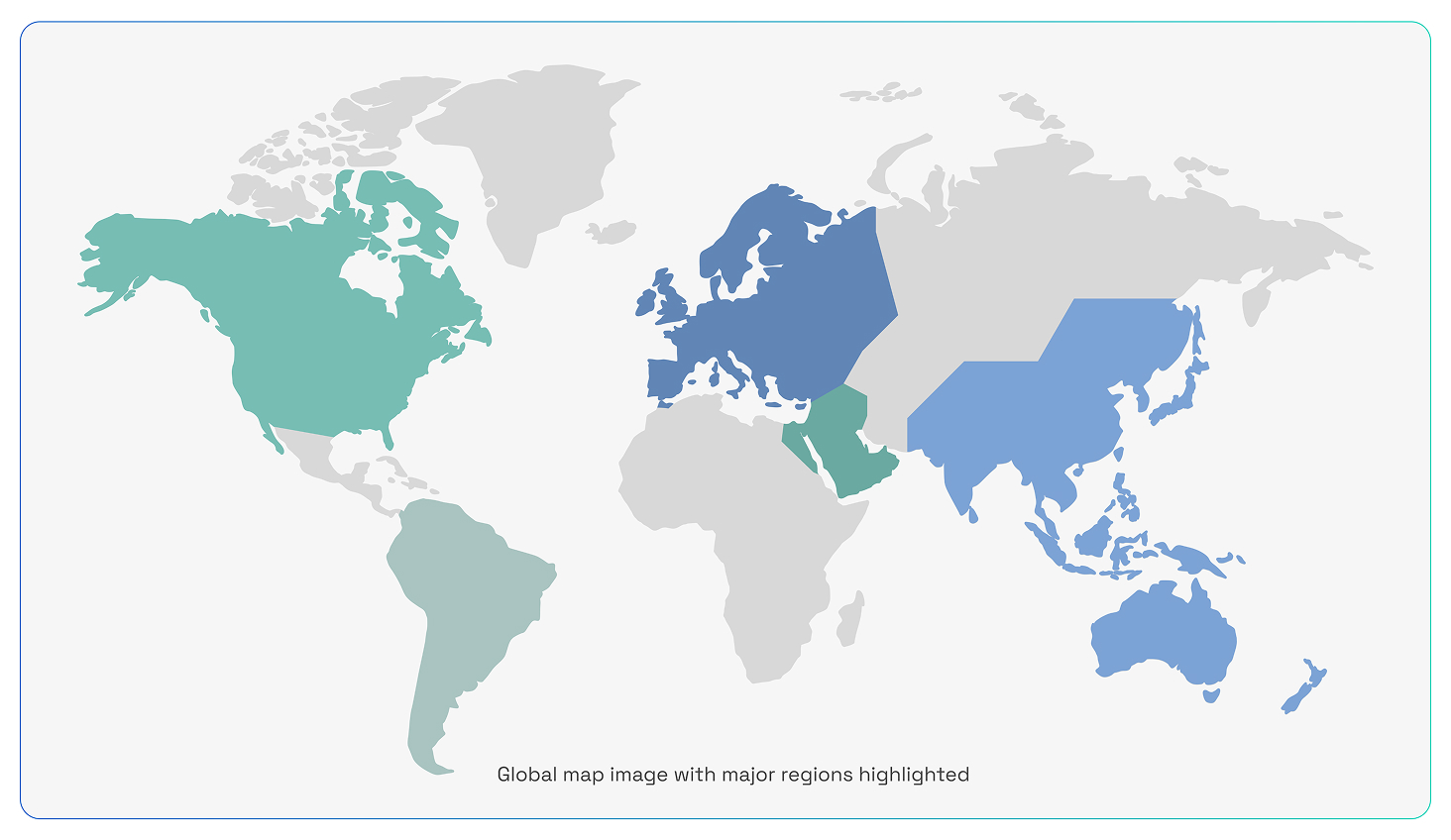
5. By Geography: Middle East & Asia-Pacific (Dominant Regions)
Middle East and Asia-Pacific lead the global market.
Key factors:
- Extreme climate conditions driving cooling demand
- Large-scale smart city developments
- Strong government support for energy efficiency
- Rapid urbanization and infrastructure expansion
Fastest-growing region:
- Europe
Drivers: What is fueling market growth?
- Rising global temperatures and cooling demand
- Growth of smart cities and urban infrastructure
- Increasing focus on energy efficiency and sustainability
- Government policies supporting green buildings
- Lower lifecycle cost compared to conventional cooling
Restraints (R) – What is limiting growth?
- High initial infrastructure and installation costs
- Complex pipeline and network requirements
- Long payback period for investments
- Limited adoption in small-scale developments
Opportunities (O) – Where is future growth coming from?
- Expansion of smart city projects globally
- Integration with renewable energy and waste heat recovery
- Retrofitting of existing urban infrastructure
- Increasing demand in emerging economies
Trends (T) – What is shaping the future?
- Shift toward sustainable and low-carbon cooling systems
- Integration with IoT-based energy management
- Adoption of thermal energy storage solutions
- Expansion of district energy networks in megacities
Methodology
We use a stepwise research approach combining secondary research, primary validation, and data triangulation to estimate market size and forecast growth.
| Step | What we do |
|---|---|
| 1. Secondary research | Review public sources (company disclosures, industry publications, and credible datasets) to map the market and build baseline assumptions. |
| 2. Primary inputs | Validate assumptions through expert inputs (manufacturers, technology providers, and domain specialists). |
| 3. Sizing & forecasting | Apply structured sizing methods and forecast models using adoption trends, segment mix, and regional demand patterns. |
| 4. Triangulation | Cross-check estimates across multiple methods and sources to ensure consistency and reduce bias. |
Outlook of the District Cooling Market
How District Cooling Systems Are Transforming Energy Efficiency and Urban Infrastructure
❄️ Key Applications
- Commercial and Residential Buildings
- Hotels, Resorts, and Hospitality Projects
- Industrial and Data Center Cooling
- Urban Districts and Smart City Infrastructure
- Healthcare and Educational Campuses
📈 Business Benefits
- Energy Efficiency and Reduced Operational Costs
- Lower Carbon Footprint and Environmental Impact
- Centralized Maintenance and Simplified Operations
- Scalable and Flexible Cooling Solutions
- Supports Smart and Sustainable Urban Development
Core Technologies
- Chilled Water Networks and Distribution Systems
- Centralized Plant Operation and Control Systems
- Thermal Energy Storage Solutions
- Integration with Building Management Systems (BMS)
- Advanced Energy Monitoring and Optimization Platforms
Market Scope & Analysis
1. By Plant Type
- Centralized District Cooling Plants
- Decentralized Systems
2. By Technology
- Electric Chillers
- Absorption Cooling
- Free Cooling
- Hybrid Systems
3. By Application
- Commercial Buildings
- Airports
- Hospitals
- Residential Complexes
- Industrial Facilities
4. By End-Use Industry
- Commercial
- Residential
- Institutional
- Industrial
5. By Geography
- Middle East & Africa
- Asia-Pacific
- Europe
- North America
- Latin America
- Emirates Central Cooling Systems Corporation
- National Central Cooling Company PJSC (Tabreed)
- ENGIE
- Veolia Environnement S.A.
- Danfoss A/S
- SHINRYO Corporation
- North America
- Europe
- Asia-Pacific
- Latin America
- Middle East
- Africa
- United States
- Canada
- Germany
- United Kingdom
- France
- China
- India
- Japan
- South Korea
- Australia
- Brazil
- Mexico
- United Arab Emirates
- Saudi Arabia
Recent Developments
Recent Developments
In February 2026, Emirates Central Cooling Systems Corporation (Empower) inaugurated a major expansion of its district cooling infrastructure in Dubai, adding a high‑efficiency tri‑generation (Trigen) cooling plant. The facility increases capacity by over 150,000 refrigeration tons (RT) and integrates advanced energy management systems that reduce electricity consumption and CO₂ emissions. The project supports Dubai’s sustainability goals and rising demand from commercial and residential developments.
In January 2026, Qatar Cool signed a strategic memorandum of understanding (MoU) with Siemens Energy to deploy digital twin and energy‑optimization solutions across its district cooling plants. The collaboration focuses on real‑time performance monitoring, predictive maintenance, and enhanced operational efficiency. The initiative aims to reduce energy use and support Qatar’s Stadium City and tourism destination projects ahead of future global events.
FAQ
A1: District Cooling Market is anticipated to grow at a CAGR of 8.01% in 2025 to 2035.
A2: The District Cooling Market is driven by applications in commercial complexes, residential communities, hospitals, and industrial facilities. Increasing focus on energy efficiency, sustainability, and centralized cooling solutions is accelerating market growth in urban and metropolitan areas.
A3: The Top companies in the District Cooling Market: Emirates Central Cooling Systems Corporation (Empower), National Central Cooling Company PJSC (Tabreed), ENGIE, Veolia Environnement S.A., Danfoss A/S, SHINRYO Corporation.
A4: The main challenges hindering the adoption of the District Cooling Market include high upfront infrastructure costs, complex system planning, regulatory hurdles, and limited awareness of centralized cooling benefits in some regions.
A5: Middle East & Africa, Asia Pacific (particularly GCC countries), and North America, due to rapid urbanization, large commercial complexes, and focus on sustainable, energy‑efficient cooling infrastructure.
A6: Key verticals in the District Cooling Market market include commercial complexes, residential communities, hospitals and healthcare facilities, educational institutions, and industrial facilities.
GET A FREE SAMPLE
This FREE sample includes market data points, ranging from trend analyses to market estimates & forecasts. See for yourself.
NEED A CUSTOM REPORT?
We can customize every report including purchasing stand-alone sections or country-level reports, as well as <b> offer affordable discounts for start-ups & universities.</b>
Share this report:
Seize Tomorrow's Opportunities Today: Access the Full Report
Our Top Selling Reports
- •Water-Soluble Vitamin & Mineral Feed Supplements Market
- •Pyridine & Pyridine Derivatives Market
- •Nutraceutical Ingredients Market
- •Functional Food Ingredients Market
- •Water-Soluble Vitamin & Mineral Feed Supplements Market
- •Pyridine & Pyridine Derivatives Market
- •Nutraceutical Ingredients Market
- •Functional Food Ingredients Market
Personalize This Report
- •Triangulate with your Own Data
- •Get Data as per your Format and Definition
- •Gain a Deeper Dive on a Specific Application, Geography, Customer or Competitor
- •Any level of Personalization
Let Us Help You
- •What are the Known and Unknown Adjacencies Impacting the Digital Health Market
- •What will your New Revenue Sources be?
- •Who will be your Top Customer; what will make them switch?
- •Defend your Market Share or Win Competitors
- •Customized Workshop Request