3D Cell Culture Market 2025-2035: Growth Drivers and Insights
GET A FREE SAMPLE
NEED A CUSTOM REPORT?
We can customize every report including purchasing stand-alone sections or country-level reports, as well as <b> offer affordable discounts for start-ups & universities.</b>
Share this report:




Introduction
Key Report Highlights
Dominant Segments
Competitive Intelligence
Strategic Insights
Regional Dynamics
Advancing Biomedical Research: Why Our Global 3D Cell Culture Market Report is Critical for Next-Gen Life Sciences
The global 3D Cell Culture market is revolutionizing biomedical research and drug discovery by providing more physiologically relevant models compared to traditional 2D cultures. These systems mimic the in vivo environment, enabling better understanding of cell behavior, disease progression, and therapeutic responses. Our report delivers comprehensive insights into market dynamics, key segments, growth drivers, and emerging innovations shaping the future of life sciences and precision medicine.
1. By Component: Consumables (Dominant Segment)
The consumables segment accounts for the largest market share.
Why it dominates:
- High and recurring demand for reagents, media, and scaffolds
- Frequent usage in research and drug screening processes
- Continuous innovation in biomaterials and hydrogels
- Essential for maintaining cell viability and growth
2. By Technology: Scaffold-Based Systems (Dominant Segment)
The scaffold-based technology leads the market.
Reasons:
- Provides structural support mimicking extracellular matrix
- Widely used in tissue engineering and regenerative medicine
- Enhances cell differentiation and proliferation
- Availability of diverse biomaterial options
3. By Application: Cancer Research (Dominant Segment)
Cancer research holds the largest share in applications.
Why:
- Accurate tumor microenvironment simulation
- Improved drug efficacy and toxicity testing
- Growing demand for personalized oncology treatments
- Reduction in reliance on animal testing
Other key applications:
- Drug discovery and development
- Stem cell research
- Tissue engineering
- Regenerative medicine
4. By End-User: Pharmaceutical & Biotechnology Companies (Dominant Segment)
Pharma and biotech companies are the leading adopters.
Why:
- Extensive use in preclinical drug screening
- Focus on reducing drug development costs and timelines
- High investment in R&D activities
- Adoption of advanced in vitro models for better outcomes
Other key end-users:
- Academic and research institutes
- Contract research organizations (CROs)
- Hospitals and diagnostic laboratories
5. By Culture Type: Spheroids (Dominant Segment)
Spheroids represent the most widely used 3D culture type.
Why:
- Simple and cost-effective formation techniques
- Mimics tumor architecture effectively
- Suitable for high-throughput screening
- Broad application in cancer and drug research
Other key culture types:
- Organoids
- Scaffold-based cultures
- Microfluidic 3D cultures
6. By Geography: North America (Dominant Region)
North America holds the largest market share.
Key factors:
- Advanced research infrastructure
- Strong presence of biotech and pharma companies
- High R&D investment
- Supportive regulatory and funding environment
Fastest-growing region:
- Asia-Pacific (India, China, Japan, South Korea)
Drivers: What is fueling market growth?
- Increasing demand for more predictive cell culture models
- Growth in cancer and stem cell research
- Rising adoption of personalized medicine
- Reduction in animal testing
- Technological advancements in 3D culture systems
Restraints (R) – What is limiting growth?
- High cost of 3D culture systems and materials
- Complexity in handling and standardization
- Limited awareness in emerging markets
- Technical challenges in scalability
Opportunities (O) – Where is future growth coming from?
- Integration with AI and high-throughput screening
- Expansion in regenerative medicine and tissue engineering
- Growth in organoid-based research
- Increasing use in precision medicine
Trends (T) – What is shaping the future?
- Development of organ-on-chip technologies
- Integration with microfluidics and bioprinting
- Advanced biomaterials for scaffold design
- Automation in 3D cell culture processes
Methodology
We use a stepwise research approach combining secondary research, primary validation, and data triangulation to estimate market size and forecast growth.
| Step | What we do |
|---|---|
| 1. Secondary research | Review public sources (company disclosures, industry publications, and credible datasets) to map the market and build baseline assumptions. |
| 2. Primary inputs | Validate assumptions through expert inputs (manufacturers, technology providers, and domain specialists). |
| 3. Sizing & forecasting | Apply structured sizing methods and forecast models using adoption trends, segment mix, and regional demand patterns. |
| 4. Triangulation | Cross-check estimates across multiple methods and sources to ensure consistency and reduce bias. |
Outlook of the 3D Cell Culture Market
How 3D cell culture technologies are advancing drug discovery, tissue engineering, and biomedical research
🧬 Key Applications
- Drug Discovery & Toxicology Studies
- Tissue Engineering & Regenerative Medicine
- Cancer & Stem Cell Research
- Organ-on-a-Chip Models
- High-Throughput Screening & Assays
📈 Business Benefits
- More physiologically relevant experimental models
- Improved drug efficacy and safety evaluation
- Reduced reliance on animal testing
- Accelerated research and development timelines
- Enhanced reproducibility and predictive accuracy
Core Technologies
- Scaffold-Based 3D Cell Cultures
- Spheroid & Organoid Models
- Microfluidics & Bioreactors
- Hydrogels & Biomaterials
- Imaging & Analytical Platforms
Market Scope & Analysis
1. By Component
- Consumables
- Instruments
- Services
2. By Technology
- Scaffold-Based
- Scaffold-Free
- Microfluidics-Based (Organ-on-Chip)
3. By Application
- Cancer Research
- Drug Discovery & Development
- Stem Cell Research
- Tissue Engineering
- Regenerative Medicine
4. By Culture Type
- Spheroids
- Organoids
- Scaffold-Based Cultures
5. By End-User
- Pharmaceutical & Biotechnology Companies
- Academic & Research Institutes
- Contract Research Organizations (CROs)
- Hospitals & Diagnostic Laboratories
6. By Geography
- North America
- Europe
- Asia-Pacific
- Latin America
- Middle East & Africa
- Corning
- Thermo Fisher Scientific
- Merck KGaA (MilliporeSigma)
- Lonza
- Eppendorf
- STEMCELL Technologies
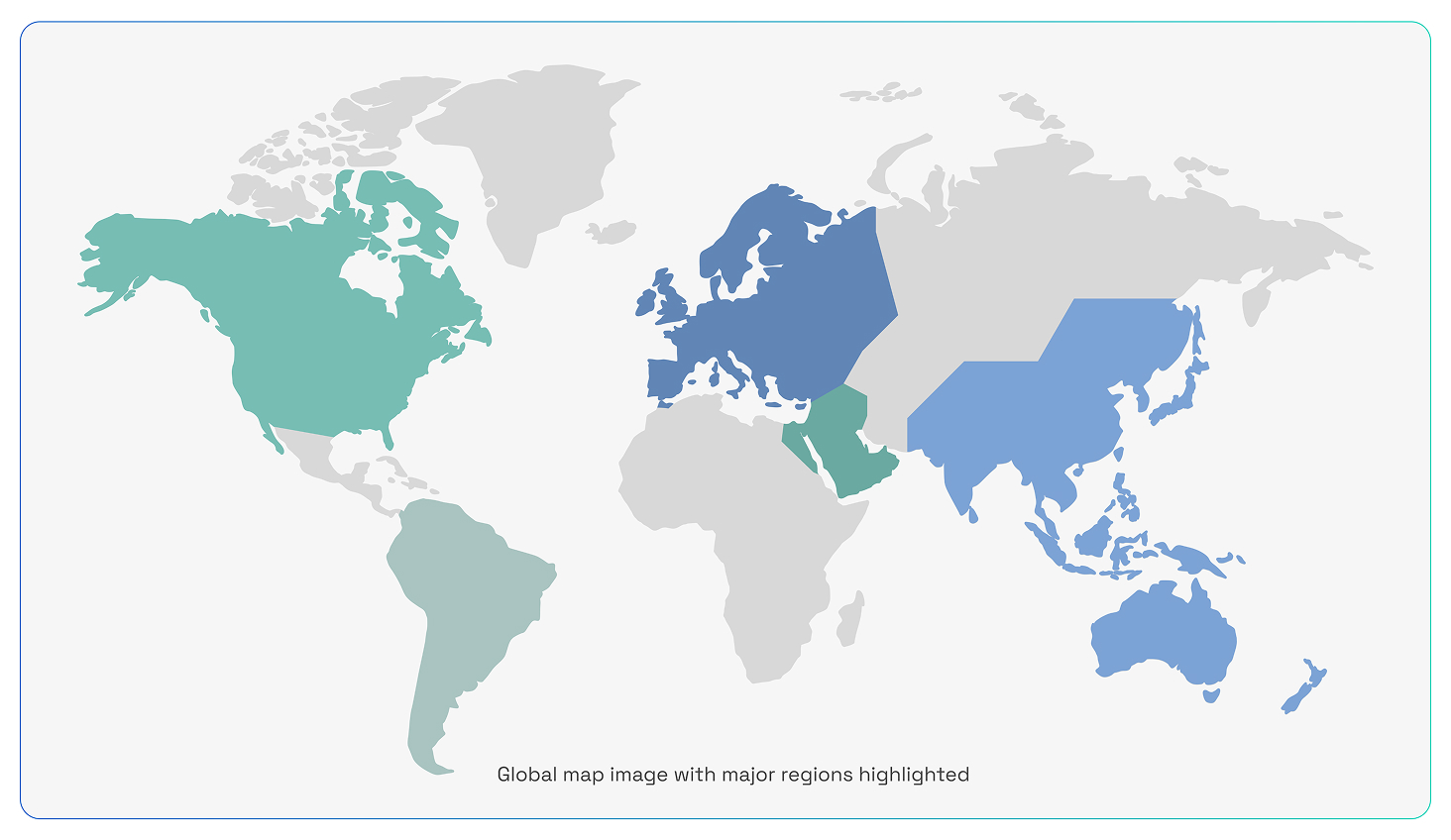
- North America
- Europe
- Asia-Pacific
- Latin America
- Middle East
- Africa
- United States
- Canada
- Germany
- United Kingdom
- France
- China
- India
- Japan
- South Korea
- Australia
- Brazil
- Mexico
- United Arab Emirates
- Saudi Arabia
Recent Developments
Recent Developments
January 2025: The next-generation 3D cell culture platform RASTRUM Allegro was introduced by Inventia Life Science with the goal of enhancing the efficiency, scalability, and reproducibility of drug development and disease research.
September 2025: In order to assist biomedical research and drug screening workflows, Precision Cell Systems strategically expanded into 3D cell culture and high-throughput cell analysis technologies with the acquisition of BennuBio.
Frequently Asked Questions
A1: 3D Cell Culture Market expects a CAGR of 14.3% from 2025 to 2035.
A2: The 3D Cell Culture Market is primarily driven by applications in drug discovery and screening, cancer research, tissue engineering, regenerative medicine, and disease modeling.
A3: Key players in the 3D Cell Culture Market include Corning Incorporated, Thermo Fisher Scientific, Merck KGaA (MilliporeSigma), Eppendorf, Invitrogen, Lonza Group, 3D Biotek (Axol), TissueLabs, and Regea Institute for Regenerative Medicine — leading providers of scaffolds, bioreactors, reagents, and platforms for three‑dimensional cell culture research.
A4: The main challenges hindering 3D cell culture adoption are high costs, technical complexity, limited standardized protocols, scalability issues, reproducibility concerns, integration with existing laboratory workflows, and the need for specialized equipment and expertise.
A5: Asia‑Pacific is expected to see the fastest growth in the 3D Cell Culture Market, driven by increasing biotechnology investments, expanding healthcare infrastructure, and rising demand for advanced research tools. ([researchandmarkets.com][1])
A6: 3D Cell Culture Market verticals include biopharma, academic research, and regenerative medicine using 3D cell culture systems for drug discovery and disease modeling.
GET A FREE SAMPLE
This FREE sample includes market data points, ranging from trend analyses to market estimates & forecasts. See for yourself.
NEED A CUSTOM REPORT?
We can customize every report including purchasing stand-alone sections or country-level reports, as well as <b> offer affordable discounts for start-ups & universities.</b>
Share this report:
Seize Tomorrow's Opportunities Today: Access the Full Report
Our Top Selling Reports
- •Water-Soluble Vitamin & Mineral Feed Supplements Market
- •Pyridine & Pyridine Derivatives Market
- •Nutraceutical Ingredients Market
- •Functional Food Ingredients Market
- •Water-Soluble Vitamin & Mineral Feed Supplements Market
- •Pyridine & Pyridine Derivatives Market
- •Nutraceutical Ingredients Market
- •Functional Food Ingredients Market
Personalize This Report
- •Triangulate with your Own Data
- •Get Data as per your Format and Definition
- •Gain a Deeper Dive on a Specific Application, Geography, Customer or Competitor
- •Any level of Personalization
Let Us Help You
- •What are the Known and Unknown Adjacencies Impacting the Digital Health Market
- •What will your New Revenue Sources be?
- •Who will be your Top Customer; what will make them switch?
- •Defend your Market Share or Win Competitors
- •Customized Workshop Request