
The Beacon Market 2025–2035: Growth Drivers, Challenges, and Forecasts
GET A FREE SAMPLE
NEED A CUSTOM REPORT?
We can customize every report including purchasing stand-alone sections or country-level reports, as well as <b> offer affordable discounts for start-ups & universities.</b>
Share this report:




Introduction
Key Report Highlights
Dominant Segments
Competitive Intelligence
Strategic Insights
Regional Dynamics
Expanding Location-Based & IoT Connectivity Solutions: Why Our Global Beacon Market Report is Essential for Smart Retail and Smart Infrastructure Growth
The global Beacon market is a rapidly growing segment of the Internet of Things (IoT) and location-based services industry, driven by increasing adoption of smart retail solutions, proximity marketing, asset tracking, and smart city development. Beacons are small wireless Bluetooth Low Energy (BLE) devices that transmit signals to nearby smartphones and connected systems, enabling real-time location-based communication and data exchange. They are widely used in retail stores, healthcare facilities, transportation hubs, hospitality, and industrial environments. With rising demand for personalized customer engagement and indoor navigation systems, the market is witnessing strong global growth.
1. By Type: Bluetooth Low Energy (BLE) Beacons (Dominant Segment)
BLE beacons hold the largest market share.
Why it dominates:
- Low power consumption and long battery life
- Easy integration with smartphones and apps
- Cost-effective deployment at scale
- Strong support across Android and iOS platforms
2. By Application: Retail & Proximity Marketing (Dominant Segment)
Retail and proximity marketing leads the market.
Why:
- Enables personalized offers and push notifications
- Improves in-store customer engagement
- Helps track consumer behavior and foot traffic
- Widely adopted by global retail brands
3. By End-Use Industry: Retail & E-commerce (Dominant Segment)
Retail and e-commerce integration dominates demand.
Why:
- Growing focus on smart shopping experiences
- Increased adoption of digital marketing tools
- Expansion of omnichannel retail strategies
- Need for real-time customer analytics
4. By Deployment: Indoor Location Systems (Dominant Segment)
Indoor positioning systems lead the market.
Why:
- Accurate navigation in malls, airports, and hospitals
- Improved asset tracking and workforce management
- Enhanced safety and operational efficiency
- Growing smart building adoption
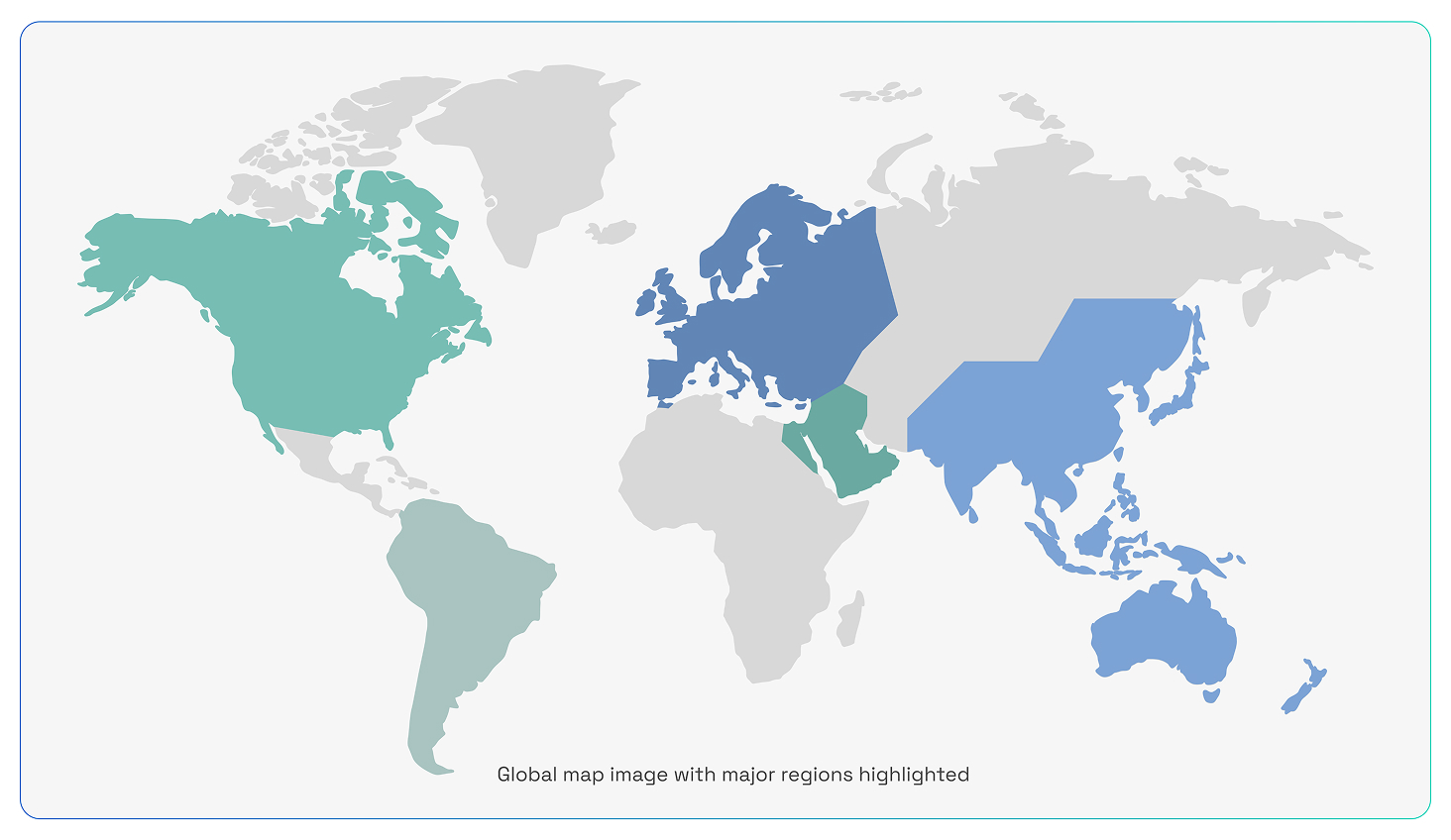
5. By Geography: North America (Dominant Region)
North America leads the global market.
Key factors:
- High adoption of IoT and smart retail technologies
- Strong presence of technology providers
- Advanced retail infrastructure and digitalization
- Early implementation of smart city projects
Fastest-growing region:
- Asia-Pacific
Drivers: What is fueling market growth?
- Rising demand for location-based services (LBS)
- Growth of smart retail and personalized marketing
- Expansion of IoT and connected devices ecosystem
- Increasing adoption in healthcare and logistics tracking
- Development of smart cities and infrastructure projects
Restraints (R) – What is limiting growth?
- Privacy and data security concerns
- Limited accuracy in crowded environments
- Dependence on smartphone compatibility
- Maintenance and battery replacement challenges
Opportunities (O) – Where is future growth coming from?
- Integration with AI and big data analytics
- Expansion in healthcare and hospital navigation systems
- Growth in smart warehouses and logistics tracking
- Adoption in autonomous systems and robotics
Trends (T) – What is shaping the future?
- Shift toward ultra-low power and long-life beacons
- Integration with mobile apps and cloud platforms
- Rise of hyper-personalized retail experiences
- Increasing use in smart city infrastructure
Methodology
We use a stepwise research approach combining secondary research, primary validation, and data triangulation to estimate market size and forecast growth.
| Step | What we do |
|---|---|
| 1. Secondary research | Review public sources (company disclosures, industry publications, and credible datasets) to map the market and build baseline assumptions. |
| 2. Primary inputs | Validate assumptions through expert inputs (manufacturers, technology providers, and domain specialists). |
| 3. Sizing & forecasting | Apply structured sizing methods and forecast models using adoption trends, segment mix, and regional demand patterns. |
| 4. Triangulation | Cross-check estimates across multiple methods and sources to ensure consistency and reduce bias. |
Beacon Market: Core Overview
How Beacon Technology Is Transforming Location-Based Services and Engagement
📍 Key Applications
- Retail and Proximity Marketing
- Indoor Navigation and Wayfinding
- Event Management and Visitor Tracking
- Smart Buildings and IoT Integration
📈 Business Benefits
- Enhanced Customer Engagement
- Improved Operational Efficiency
- Data-Driven Insights and Analytics
- Support for Personalized Services and Offers
⚙️ Core Technologies
- Bluetooth Low Energy (BLE) Beacons
- Proximity Sensors and Signal Processing
- Cloud-Based Analytics Platforms
- Integration with Mobile Apps and IoT Systems
Market Scope & Analysis
1. By Type: Bluetooth Low Energy (BLE) Beacons (Dominant Segment)
BLE beacons hold the largest market share.
2. By Application
Retail and proximity marketing leads the market.
3. By End-Use Industry: Retail & E-commerce (Dominant Segment)
Retail and e-commerce integration dominates demand.
4. By Deployment: Indoor Location Systems (Dominant Segment)
Indoor positioning systems lead the market.
Why:
- Accurate navigation in malls, airports, and hospitals
- Improved asset tracking and workforce management
- Enhanced safety and operational efficiency
- Growing smart building adoption
5. By Geography: North America (Dominant Region)
North America leads the global market.
Key factors:
- High adoption of IoT and smart retail technologies
- Strong presence of technology providers
- Advanced retail infrastructure and digitalization
- Early implementation of smart city projects
Fastest-growing region:
- Asia-Pacific
Drivers
- Rising demand for location-based services (LBS)
- Growth of smart retail and personalized marketing
- Expansion of IoT and connected devices ecosystem
- Increasing adoption in healthcare and logistics tracking
- Development of smart cities and infrastructure projects
Restraints
- Privacy and data security concerns
- Limited accuracy in crowded environments
- Dependence on smartphone compatibility
- Maintenance and battery replacement challenges
Opportunities
- Integration with AI and big data analytics
- Expansion in healthcare and hospital navigation systems
- Growth in smart warehouses and logistics tracking
- Adoption in autonomous systems and robotics
Trends
- Shift toward ultra-low power and long-life beacons
- Integration with mobile apps and cloud platforms
- Rise of hyper-personalized retail experiences
- Increasing use in smart city infrastructure
- Apple
- Hewlett Packyard
- Gimbal
- Estimote
- Kontaki,io
- BlueCats
- North America
- Europe
- Asia-Pacific
- Latin America
- Middle East
- Africa
- United States
- Canada
- Germany
- United Kingdom
- France
- China
- India
- Japan
- South Korea
- Australia
- Brazil
- Mexico
- United Arab Emirates
- Saudi Arabia
Recent Developments
Recent Developments
In October 2025, Estimote introduced a new generation of Bluetooth Low Energy (BLE) beacons featuring extended battery life, enhanced security protocols, and integrated environmental sensing (temperature and motion). These beacons are optimized for retail, hospitality, and smart building applications, enabling more precise proximity detection and contextual engagement while reducing maintenance overhead.
In August 2025, Kontakt.io announced a strategic collaboration with Cisco Systems to integrate beacon‑based indoor positioning with Cisco’s networking and IoT platforms. The partnership aims to deliver real‑time asset tracking, personnel visibility, and occupancy analytics in large enterprise environments such as hospitals, warehouses, and campuses, leveraging BLE beacon clusters alongside Wi‑Fi and infrastructure sensors.
Frequently Asked Questions
A1: Beacon Market is anticipated to grow at a CAGR of 19.71% in 2025 to 2035.
A2: The Beacon Market is growing due to applications in retail proximity marketing, asset tracking, indoor navigation, and healthcare monitoring. Rising demand for personalized consumer experiences and real-time location services is driving market growth.
A3: Here are top companies in the Beacon Market: Kontakt.io, Estimote Inc., Gimbal Inc., Apple Inc., BlueCats, Hewlett Packard Enterprise (Aruba Networks).
A4: The main challenges hindering the adoption of the Beacon Market are privacy concerns, limited consumer awareness, high deployment costs, and technological compatibility issues with existing devices.
A5: North America, Europe, and Asia Pacific, supported by retail proximity services, indoor navigation solutions, and expanding IoT ecosystems.
A6: Key verticals in the Beacon Market market include retail and e-commerce, healthcare and hospitals, logistics and asset tracking, and smart buildings.
GET A FREE SAMPLE
This FREE sample includes market data points, ranging from trend analyses to market estimates & forecasts. See for yourself.
NEED A CUSTOM REPORT?
We can customize every report including purchasing stand-alone sections or country-level reports, as well as <b> offer affordable discounts for start-ups & universities.</b>
Share this report:
Seize Tomorrow's Opportunities Today: Access the Full Report
Our Top Selling Reports
- •Water-Soluble Vitamin & Mineral Feed Supplements Market
- •Pyridine & Pyridine Derivatives Market
- •Nutraceutical Ingredients Market
- •Functional Food Ingredients Market
- •Water-Soluble Vitamin & Mineral Feed Supplements Market
- •Pyridine & Pyridine Derivatives Market
- •Nutraceutical Ingredients Market
- •Functional Food Ingredients Market
Personalize This Report
- •Triangulate with your Own Data
- •Get Data as per your Format and Definition
- •Gain a Deeper Dive on a Specific Application, Geography, Customer or Competitor
- •Any level of Personalization
Let Us Help You
- •What are the Known and Unknown Adjacencies Impacting the Digital Health Market
- •What will your New Revenue Sources be?
- •Who will be your Top Customer; what will make them switch?
- •Defend your Market Share or Win Competitors
- •Customized Workshop Request