
The Agricultural Robots Market 2025–2035: Market Expansion, Regulatory Challenges, and Outlook
GET A FREE SAMPLE
NEED A CUSTOM REPORT?
We can customize every report including purchasing stand-alone sections or country-level reports, as well as <b> offer affordable discounts for start-ups & universities.</b>
Share this report:




Introduction
Key Report Highlights
Dominant Segments
Competitive Intelligence
Strategic Insights
Regional Dynamics
Transforming Smart Farming & Precision Agriculture: Why Our Global Agricultural Robots Market Report is Essential for the Future of Food Production
The global Agricultural Robots market is a fast-growing segment of the agri-tech and automation industry, driven by rising food demand, labor shortages, and the need for higher farm productivity. Agricultural robots are used for planting, harvesting, weeding, spraying, monitoring crops, and managing livestock operations using AI, sensors, and autonomous systems. With the rise of precision agriculture, IoT-based farming, and sustainable cultivation practices, the market is witnessing rapid global expansion.
1. By Type: Dairy Robots & UAVs (Dominant Segment)
Dairy robots and UAVs (drones) hold major market share.
Why it dominates:
- Automated milking improves productivity and animal welfare
- Drones enable crop monitoring and precision spraying
- Reduces dependency on manual labor
- High adoption in large-scale farms
2. By Application: Milking & Crop Monitoring (Dominant Segment)
Milking and crop monitoring lead application demand.
Why:
- Labor shortages in dairy farming
- Need for continuous farm monitoring
- Higher yield and efficiency through automation
- Improved animal health tracking systems
3. By Offering: Hardware (Dominant Segment)
Hardware components dominate the market.
Why:
- Includes robots, sensors, and autonomous machines
- High initial investment in physical systems
- Essential for field operations
- Strong demand for durable farm equipment
4. By Farming Type: Field Farming (Dominant Segment)
Field farming is the leading segment.
Why:
- Large-scale crop cultivation globally
- High use of robots in planting and harvesting
- Need for precision agriculture techniques
- Expansion of commercial farming operations
5. By Geography: North America (Dominant Region)
North America leads the global market.
Key factors:
- High adoption of advanced farming technologies
- Large commercial farming infrastructure
- Strong investment in agri-tech startups
- Growing labor shortage in agriculture
Fastest-growing region:
- Asia-Pacific
Drivers: What is fueling market growth?
- Rising global food demand and population growth
- Increasing agricultural labor shortages
- Advancements in AI, IoT, and robotics
- Need for precision farming and higher yield efficiency
- Government support for smart agriculture adoption
Restraints (R) – What is limiting growth?
- High cost of agricultural robotic systems
- Complex maintenance and technical requirements
- Limited adoption in small-scale farms
- Dependence on stable connectivity and infrastructure
Opportunities (O) – Where is future growth coming from?
- Expansion of smart farming and precision agriculture
- AI-powered autonomous harvesting systems
- Growth in drone-based crop monitoring
- Adoption in emerging agricultural economies
Trends (T) – What is shaping the future?
- Shift toward fully autonomous farming systems
- Integration of AI and predictive analytics
- Rise of robotics-as-a-service (RaaS) models
- Increasing use of drones and sensor-based farming
Methodology
We use a stepwise research approach combining secondary research, primary validation, and data triangulation to estimate market size and forecast growth.
| Step | What we do |
|---|---|
| 1. Secondary research | Review public sources (company disclosures, industry publications, and credible datasets) to map the market and build baseline assumptions. |
| 2. Primary inputs | Validate assumptions through expert inputs (manufacturers, technology providers, and domain specialists). |
| 3. Sizing & forecasting | Apply structured sizing methods and forecast models using adoption trends, segment mix, and regional demand patterns. |
| 4. Triangulation | Cross-check estimates across multiple methods and sources to ensure consistency and reduce bias. |
Agricultural Robots Market: Core Overview
How Agricultural Robots Are Transforming Modern Farming Practices
🚜 Key Applications
- Automated Planting and Seeding
- Precision Crop Monitoring and Management
- Harvesting and Sorting Operations
- Weeding, Spraying, and Soil Analysis
📈 Business Benefits
- Increased Productivity and Crop Yield
- Reduced Labor Costs and Human Dependency
- Enhanced Precision and Resource Efficiency
- Support for Sustainable and Smart Farming Practices
⚙️ Core Technologies
- Autonomous Navigation and GPS Systems
- Machine Learning and AI for Crop Analysis
- Robotic Arms and Sensor-Driven Actuators
- IoT and Cloud-Based Farm Management Platforms
Market Scope & Analysis
1. By Type
- Unmanned Aerial Vehicles (Drones)
- Automated Tractors
- Milking Robots
- Weeding Robots
2. By Application
- Harvesting
- Planting
- Weeding
- Milking
- Crop Monitoring
3. By Offering
- Hardware
- Software
- Services
4. By Farm Type
- Large Farms
- Medium Farms
- Small Farms
5. By Geography
- North America
- Europe
- Asia-Pacific
- Latin America
- Middle East & Africa
- Deere & Company
- Trimble Inc.
- DJI
- AGCO Corporation
- CNH Industrial N.V.
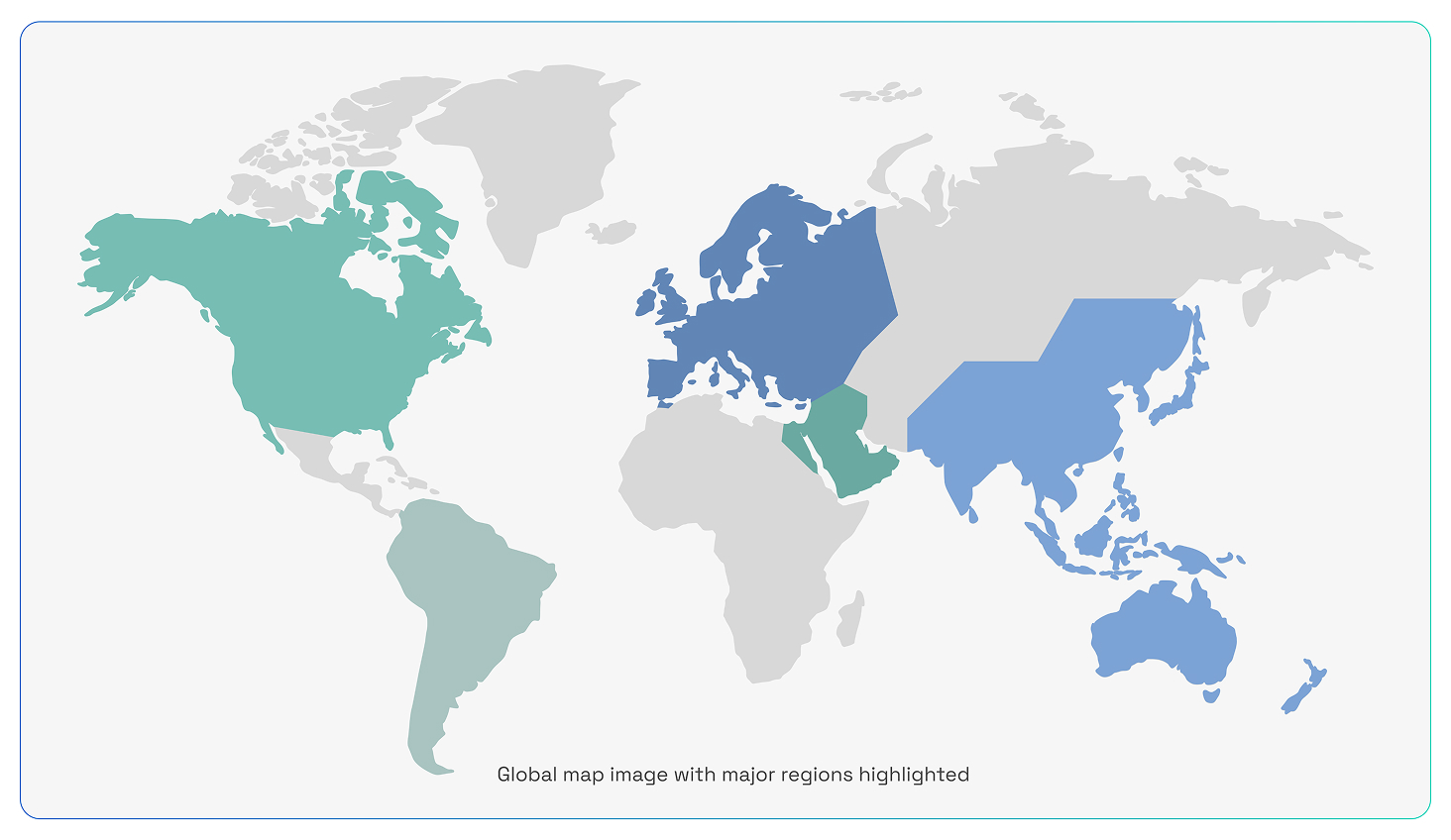
- North America
- Europe
- Asia-Pacific
- Latin America
- Middle East
- Africa
- United States
- Canada
- Germany
- United Kingdom
- France
- China
- India
- Japan
- South Korea
- Australia
- Brazil
- Mexico
- United Arab Emirates
- Saudi Arabia
Recent Developments
Recent Developments
In January 2026, John Deere unveiled its next‑generation autonomous sprayer equipped with enhanced AI‑based navigation and precision application systems. The robot uses advanced sensors and machine learning to optimize spraying patterns, conserve chemicals, and reduce crop damage. This launch reflects a broader trend of full autonomy in agricultural machinery for precision farming use cases.
In August 2025, AGCO Corporation entered a strategic partnership with Bosch Rexroth to co‑develop smart robotic modules for crop monitoring and autonomous cultivation. The collaboration combines AGCO’s expertise in farm machinery with Bosch’s sensor and automation technologies to create modular robots that can be retrofitted to existing equipment or deployed as standalone systems.
Frequently Asked Questions
A1: Agricultural Robots Market is anticipated to grow at a CAGR of 22.4% in 2025 to 2035.
A2: The Agricultural Robots Market is growing due to applications in automated planting, harvesting, weeding, and crop monitoring. Increasing adoption of smart farming solutions to improve efficiency, reduce labor costs, and enhance productivity is driving market growth globally.
A3: Top companies in the Agricultural Robots Market: Deere & Company, AGCO Corporation, CNH Industrial N.V., DJI, Trimble Inc., Lely
A4: The main challenges hindering the adoption of the Agricultural Robots Market include high initial investment, technological complexity, lack of skilled operators, and limited awareness among small-scale farmers.
A5: North America, Europe, and Asia Pacific (especially China and Japan), due to rising precision agriculture adoption, government support for smart farming, and investments in automation technologies.
A6: Key verticals in the Agricultural Robots Market market include crop monitoring, planting and seeding, harvesting, weeding and spraying, and precision farming.
GET A FREE SAMPLE
This FREE sample includes market data points, ranging from trend analyses to market estimates & forecasts. See for yourself.
NEED A CUSTOM REPORT?
We can customize every report including purchasing stand-alone sections or country-level reports, as well as <b> offer affordable discounts for start-ups & universities.</b>
Share this report:
Seize Tomorrow's Opportunities Today: Access the Full Report
Our Top Selling Reports
- •Water-Soluble Vitamin & Mineral Feed Supplements Market
- •Pyridine & Pyridine Derivatives Market
- •Nutraceutical Ingredients Market
- •Functional Food Ingredients Market
- •Water-Soluble Vitamin & Mineral Feed Supplements Market
- •Pyridine & Pyridine Derivatives Market
- •Nutraceutical Ingredients Market
- •Functional Food Ingredients Market
Personalize This Report
- •Triangulate with your Own Data
- •Get Data as per your Format and Definition
- •Gain a Deeper Dive on a Specific Application, Geography, Customer or Competitor
- •Any level of Personalization
Let Us Help You
- •What are the Known and Unknown Adjacencies Impacting the Digital Health Market
- •What will your New Revenue Sources be?
- •Who will be your Top Customer; what will make them switch?
- •Defend your Market Share or Win Competitors
- •Customized Workshop Request