
Healthcare Analytics Market 2025–2035: Growth Outlook, Market Challenges, and Forecast
GET A FREE SAMPLE
NEED A CUSTOM REPORT?
We can customize every report including purchasing stand-alone sections or country-level reports, as well as <b> offer affordable discounts for start-ups & universities.</b>
Share this report:




Introduction
Key Report Highlights
Dominant Segments
Competitive Intelligence
Strategic Insights
Regional Dynamics
Rising Digital Health Adoption, AI Integration & Value-Based Care Models: Why the Healthcare Analytics Market is Expanding Rapidly
The global healthcare analytics market is growing strongly due to increasing digitization of healthcare systems, rising volumes of patient data, and the need for improved clinical decision-making and operational efficiency. Healthcare analytics involves the use of data analysis tools and techniques to derive insights from medical records, insurance claims, clinical trials, and patient monitoring systems.
Healthcare providers, payers, and life sciences organizations are increasingly adopting analytics solutions to improve patient outcomes, reduce costs, detect diseases early, and enhance hospital management systems. The growing adoption of electronic health records (EHRs), AI-based diagnostic tools, and predictive analytics is further accelerating market growth worldwide.
1. By Type: Predictive Analytics (Dominant Segment)
Predictive analytics dominates the healthcare analytics market.
Why it dominates:
- Helps forecast disease risks and patient outcomes
- Supports early diagnosis and preventive care
- Widely used in chronic disease management
- Increasing integration with AI and machine learning
2. By Type: Descriptive Analytics
Descriptive analytics is widely used in healthcare systems.
Why:
- Analyzes historical patient and hospital data
- Improves reporting and performance tracking
- Helps in identifying healthcare trends
- Supports operational decision-making
3. By Type: Prescriptive Analytics
Prescriptive analytics is a fast-growing segment.
Why:
- Provides actionable treatment recommendations
- Optimizes clinical and operational decisions
- Enhances personalized medicine approaches
- Uses AI-driven simulation models
4. By Application: Clinical Analytics (Dominant Segment)
Clinical analytics leads the market.
Key factors:
- Improves patient diagnosis and treatment planning
- Reduces medical errors and hospital readmissions
- Enhances evidence-based clinical decisions
- Strong adoption in hospitals and clinics
5. By Application: Financial Analytics
Financial analytics is an important segment.
Why:
- Helps reduce healthcare costs and fraud
- Optimizes billing and reimbursement processes
- Improves revenue cycle management
- Used by insurance providers and hospitals
6. By End User: Healthcare Providers (Dominant Segment)
Healthcare providers dominate the market.
Key factors:
- Hospitals and clinics generating large volumes of patient data
- Need for operational efficiency and better outcomes
- Adoption of electronic health record systems
- Integration of AI-based diagnostic tools
Fastest-growing segment:
- Healthcare payers and insurance companies
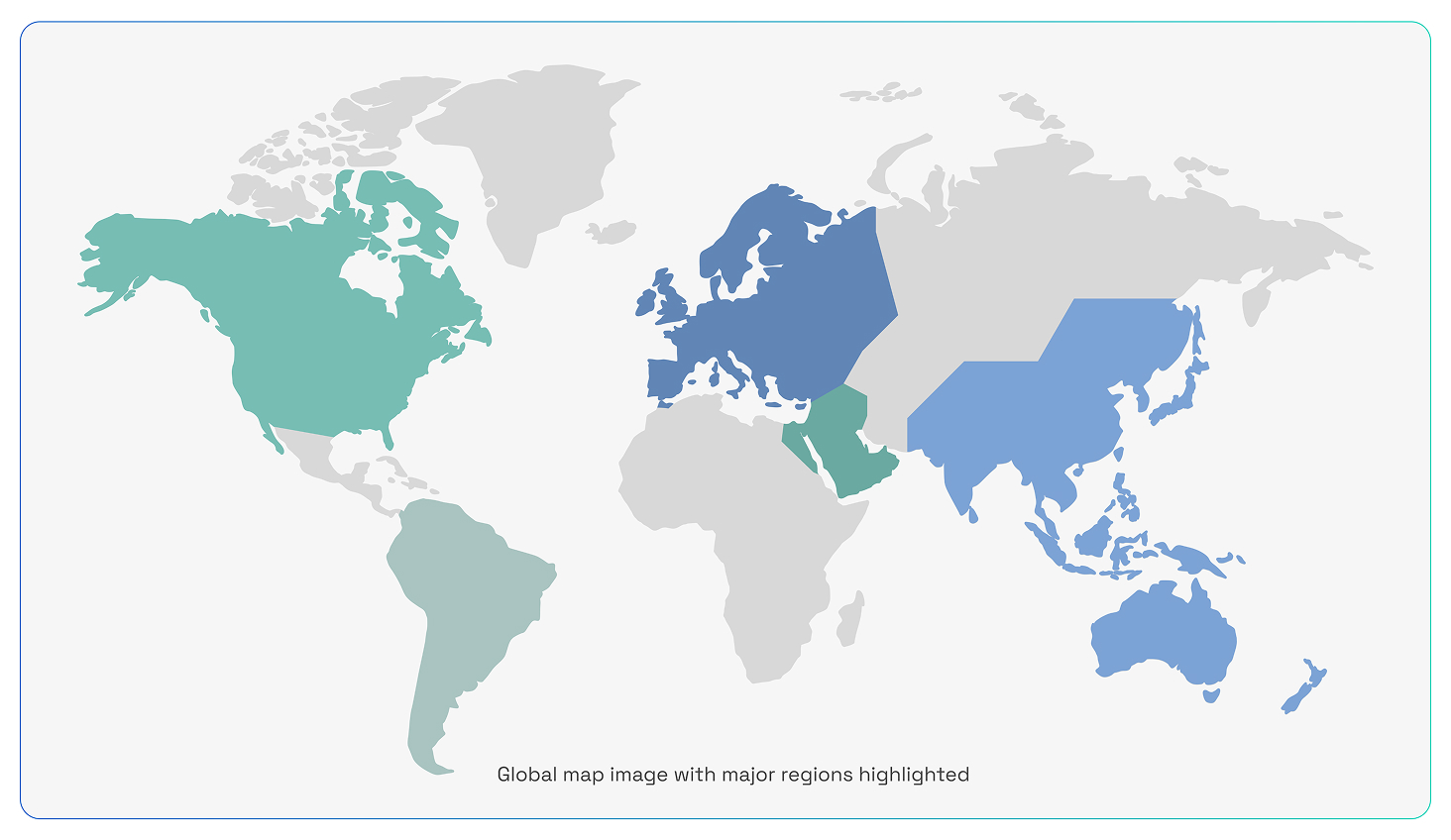
7. By Geography: North America (Dominant Region)
North America leads the healthcare analytics market.
Key factors:
- Advanced healthcare IT infrastructure
- High adoption of EHR and AI-based systems
- Strong presence of analytics solution providers
- Government support for digital healthcare initiatives
Fastest-growing region:
- Asia-Pacific
Drivers: What is fueling market growth?
- Rapid digitization of healthcare systems
- Increasing adoption of electronic health records (EHRs)
- Rising demand for cost-effective healthcare delivery
- Growth of AI and big data in healthcare
- Focus on value-based care models
Restraints (R) – What is limiting growth?
- Data privacy and security concerns
- High implementation and integration costs
- Lack of skilled healthcare data professionals
- Complexity of healthcare data standardization
Opportunities (O) – Where is future growth coming from?
- Expansion of AI-powered clinical decision support systems
- Growth in personalized and precision medicine
- Increasing adoption of cloud-based healthcare analytics
- Integration with wearable and remote monitoring devices
Trends (T) – What is shaping the future?
- Shift toward real-time healthcare analytics
- Growing use of predictive and prescriptive analytics
- Expansion of telehealth and remote patient monitoring
- Increasing focus on interoperability of healthcare data
Methodology
We use a stepwise research approach combining secondary research, primary validation, and data triangulation to estimate market size and forecast growth.
| Step | What we do |
|---|---|
| 1. Secondary research | Review public sources (company disclosures, industry publications, and credible datasets) to map the market and build baseline assumptions. |
| 2. Primary inputs | Validate assumptions through expert inputs (manufacturers, technology providers, and domain specialists). |
| 3. Sizing & forecasting | Apply structured sizing methods and forecast models using adoption trends, segment mix, and regional demand patterns. |
| 4. Triangulation | Cross-check estimates across multiple methods and sources to ensure consistency and reduce bias. |
Outlook of the Healthcare Analytics Market
How Healthcare Analytics Enhances Patient Care, Operational Efficiency, and Data-Driven Decision Making
🏥 Key Applications
- Patient Care & Outcomes Analysis
- Hospital & Clinical Operations Optimization
- Population Health Management
- Predictive Analytics for Disease & Risk Management
- Medical Research & Data-Driven Insights
📈 Business Benefits
- Improved Clinical & Operational Efficiency
- Data-Driven Decision Making
- Cost Reduction & Resource Optimization
- Enhanced Patient Engagement & Outcomes
- Compliance with Regulatory & Quality Standards
Core Technologies
- Electronic Health Records (EHR) Integration
- Big Data Analytics & Machine Learning
- Predictive & Prescriptive Analytics Tools
- Healthcare Dashboards & Visualization Platforms
- Security & Privacy Compliance Tools
Market Scope & Analysis
1. By Type
- Descriptive Analytics
- Predictive Analytics
- Prescriptive Analytics
- Cognitive Analytics
2. By Application
- Clinical Analytics
- Financial Analytics
- Operational Analytics
- Population Health Analytics
- Research & Development Analytics
3. By Component
- Software
- Hardware
- Services
4. By End User
- Healthcare Providers
- Healthcare Payers
- Pharmaceutical & Biotechnology Companies
- Research Centers
5. By Deployment Mode
- On-Premise
- Cloud-Based
- Hybrid
6. By Geography
- North America
- Europe
- Asia-Pacific
- Latin America
- Middle East & Africa
- IBM
- Optum
- Cerner
- SAS Institute
- Oracle
- North America
- Europe
- Asia-Pacific
- Latin America
- Middle East
- Africa
- United States
- Canada
- Germany
- United Kingdom
- France
- China
- India
- Japan
- South Korea
- Australia
- Brazil
- Mexico
- United Arab Emirates
- Saudi Arabia
Recent Developments
Recent Developments
July 2025: A leading health‑tech company launched an AI‑driven analytics platform that integrates real‑time patient data to support predictive clinical decision‑making across hospital networks.
November 2024: A global healthcare system partnered with a data analytics provider to embed advanced predictive models into its electronic health records for population health management.
Frequently Asked Questions
A1: The global healthcare analytics market is expected to grow at a CAGR of 14.2% between 2025 and 2035, reflecting adoption of AI and data-driven healthcare solutions.
A2: Clinical decision support, population health management, and predictive analytics are driving the healthcare analytics market.
A3: The key players in Healthcare Analytics Market are – IBM, Optum, Cerner, SAS Institute, and Oracle.
A4: Data quality, interoperability, and privacy issues hinder healthcare analytics market growth.
A5: Healthcare analytics market expands fastest in North America supported by digital health initiatives.
A6: Healthcare analytics market verticals are hospitals, insurance providers, pharmaceutical companies, research labs, and government health agencies.
GET A FREE SAMPLE
This FREE sample includes market data points, ranging from trend analyses to market estimates & forecasts. See for yourself.
NEED A CUSTOM REPORT?
We can customize every report including purchasing stand-alone sections or country-level reports, as well as <b> offer affordable discounts for start-ups & universities.</b>
Share this report:
Seize Tomorrow's Opportunities Today: Access the Full Report
Our Top Selling Reports
- •Water-Soluble Vitamin & Mineral Feed Supplements Market
- •Pyridine & Pyridine Derivatives Market
- •Nutraceutical Ingredients Market
- •Functional Food Ingredients Market
- •Water-Soluble Vitamin & Mineral Feed Supplements Market
- •Pyridine & Pyridine Derivatives Market
- •Nutraceutical Ingredients Market
- •Functional Food Ingredients Market
Personalize This Report
- •Triangulate with your Own Data
- •Get Data as per your Format and Definition
- •Gain a Deeper Dive on a Specific Application, Geography, Customer or Competitor
- •Any level of Personalization
Let Us Help You
- •What are the Known and Unknown Adjacencies Impacting the Digital Health Market
- •What will your New Revenue Sources be?
- •Who will be your Top Customer; what will make them switch?
- •Defend your Market Share or Win Competitors
- •Customized Workshop Request