
Data Analytics Market 2025-2032: Growth Drivers, Trends, and Strategic Outlook
GET A FREE SAMPLE
NEED A CUSTOM REPORT?
We can customize every report including purchasing stand-alone sections or country-level reports, as well as <b> offer affordable discounts for start-ups & universities.</b>
Share this report:




Introduction
Key Report Highlights
Dominant Segments
Competitive Intelligence
Strategic Insights
Regional Dynamics
Unlock Competitive Intelligence: Why Our Global Data Analytics Market Report is Essential for Your Growth Strategy
In today’s data-driven economy, understanding the global data analytics market is critical for organizations aiming to stay competitive and future-ready. Our report delivers deep insights into emerging trends, key growth drivers, competitive landscape, and cutting-edge technologies shaping the analytics ecosystem. It empowers decision-makers to optimize investments, enhance operational efficiency, and unlock actionable intelligence for sustained business growth.
1. By Deployment Mode: Cloud-Based Analytics (Dominant Segment)
The cloud-based deployment model leads the market.
Why it dominates:
- Lower infrastructure and maintenance costs
- Scalability and on-demand resource availability
- Faster implementation and updates
- Growing adoption of SaaS analytics platforms
Organizations are rapidly shifting to cloud analytics to enable real-time insights and support distributed work environments.
2. By Component: Software Segment (Dominant)
The software segment holds the largest share compared to services.
Key software categories:
- Business Intelligence (BI) tools
- Data visualization platforms
- Predictive & prescriptive analytics
- Data management and integration tools
Reason for dominance:
Businesses prioritize analytics platforms that generate insights and directly influence decision-making.
3. By Organization Size: Large Enterprises (Dominant)
Large enterprises account for the highest adoption of data analytics solutions.
Why:
- Massive volumes of structured and unstructured data
- Strong investment capabilities
- Advanced analytics and AI integration needs
- Global operations requiring real-time insights
Growth note:
SMEs are the fastest-growing segment, driven by affordable cloud-based analytics tools.
4. By Industry Vertical: BFSI (Dominant Segment)
The BFSI sector leads the market.
Reasons:
- High reliance on data for risk management and fraud detection
- Demand for personalized financial services
- Regulatory compliance and reporting requirements
- Real-time transaction monitoring
Other key industries:
- Retail & e-commerce
- Healthcare
- IT & telecom
5. By Analytics Type: Descriptive Analytics (Dominant)
Descriptive analytics remains the most widely used type.
Why:
- Provides historical insights and performance tracking
- Easy implementation and widespread adoption
- Foundation for advanced analytics (predictive & prescriptive)
Emerging trend:
- Predictive and prescriptive analytics are rapidly growing due to AI and machine learning advancements
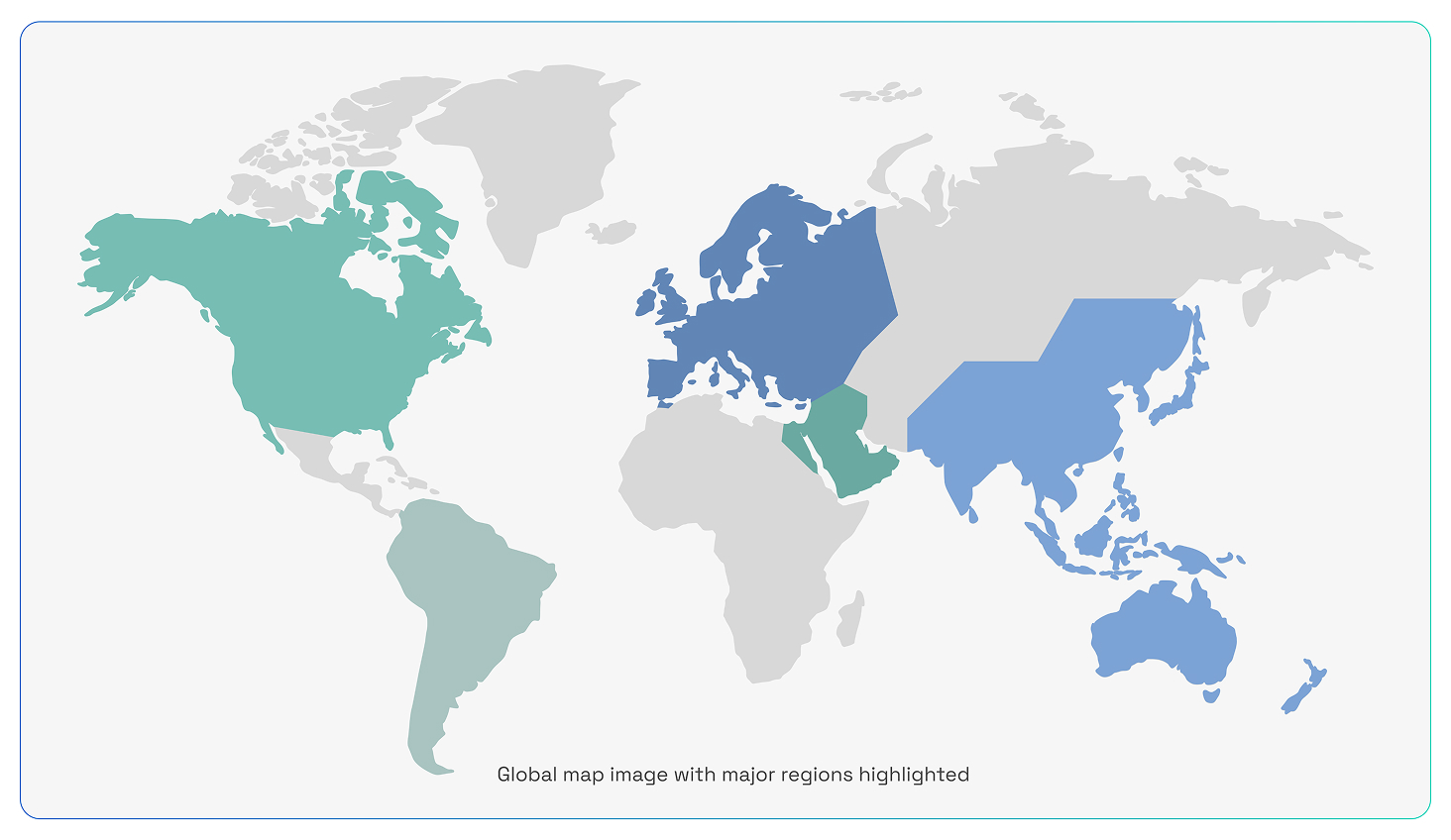
6. By Geography: North America (Dominant Region)
North America holds the largest market share.
Key factors:
- Strong presence of leading analytics vendors
- Early adoption of AI and big data technologies
- High enterprise spending on digital transformation
- Advanced IT infrastructure
Fastest-growing region:
- Asia-Pacific (notably India, China, and Southeast Asia)
Drivers: What is fueling market growth?
- Explosion of big data from digital platforms
- Increasing adoption of AI and machine learning
- Demand for real-time decision-making
- Digital transformation across industries
- Growth of IoT and connected devices
Restraints (R) – What is limiting growth?
- Data privacy and security concerns
- Shortage of skilled data professionals
- High implementation complexity
- Data integration challenges
Opportunities (O) – Where is future growth coming from?
- AI-driven and augmented analytics
- Expansion in emerging markets
- Industry-specific analytics solutions
- Self-service analytics platforms
Trends (T) – What is shaping the future?
- Augmented analytics (AI-assisted insights)
- Data democratization across organizations
- Integration of analytics with business applications
- Real-time and streaming analytics
Methodology
We use a stepwise research approach combining secondary research, primary validation, and data triangulation to estimate market size and forecast growth.
| Step | What we do |
|---|---|
| 1. Secondary research | Review public sources (company disclosures, industry publications, and credible datasets) to map the market and build baseline assumptions. |
| 2. Primary inputs | Validate assumptions through expert inputs (manufacturers, technology providers, and domain specialists). |
| 3. Sizing & forecasting | Apply structured sizing methods and forecast models using adoption trends, segment mix, and regional demand patterns. |
| 4. Triangulation | Cross-check estimates across multiple methods and sources to ensure consistency and reduce bias. |
Data Analytics Market: At a Glance
How Data Analytics Transforming Modern Business Operations
🔧 Key Applications
- Customer Analytics
- Budgeting, forecasting, and fraud detection
- AI-
- Campaign optimization and ROI measurement
📈 Business Benefits
- Enhanced Customer Experience
- Revenue Growth
- Risk Management
Core Technologies
- Artificial Intelligence (AI) & Machine Learning (ML)
- Big Data Technologies
- Business Intelligence (BI) Tools
Market Scope & Analysis
1. By Deployment Mode
- Cloud-Based
- On-Premises
2. By Component
- Software
- Business Intelligence (BI) Tools
- Data Visualization Tools
- Data Management Software
- Advanced Analytics (Predictive & Prescriptive)
- Services
- Managed Services
- Professional Services
3. By Organization Size
- Large Enterprises
- Small & Medium Enterprises (SMEs)
4. By Analytics Type
- Descriptive Analytics
- Diagnostic Analytics
- Predictive Analytics
- Prescriptive Analytics
5. By Application
- Customer Analytics
- Supply Chain Analytics
- Marketing & Sales Analytics
- Financial Analytics
- Risk & Fraud Analytics
- Human Resource (HR) Analytics
6. By Industry Vertical
- BFSI
- IT & Telecom
- Retail & E-commerce
- Healthcare
- Manufacturing
- Government & Defense
- Energy & Utilities
7. By Deployment Type (Optional Granular Split)
- Public Cloud
- Private Cloud
- Hybrid Cloud
8. By Geography
- North America
- Europe
- Asia-Pacific
- Latin America
- Middle East & Africa
- IBM
- Microsoft
- Oracle
- SAP
- SAS Institute
- Tableau
- Qlik
- Teradata
- Snowflake
- Amazon Web Services
- Alteryx
- North America
- Europe
- Asia-Pacific
- Latin America
- Middle East
- Africa
- United States
- Canada
- Germany
- United Kingdom
- France
- China
- India
- Japan
- South Korea
- Australia
- Brazil
- Mexico
- United Arab Emirates
- Saudi Arabia
Recent Developments
Recent Developments
In 2025, Microsoft expanded the generative AI capabilities of analyticstools and integrated advanced AI models into platforms to improve conversational and context-basedanalytics features.
Marketing analytics startup HockeyStack raised $20 million in Series A funding and launched Odin, an AI‑powered analytics agent that automates customer journey and campaign attribution insights, strengthening analytics capabilities for marketers.
Frequently Asked Questions
A1: Synapsea Global expects the global data analytics market to grow at a CAGR of 28.6% from 2025 to 2032, rising demand for data-driven insights, rapid AI and machine learning adoption, and increasing cloud deployment are key drivers of market growth.
A2: Key application driving growth in the data analytics market are - customer analytics, operational analytics, and predictive analytics.
A3: Key players in the global data analytics market include Microsoft, IBM, SAP, Oracle, SAS Institute, Amazon Web Services (AWS), Google, Alteryx, Tableau, Qlik, Teradata, and ThoughtSpot.
A4: Key restrains ahead of adoption of data analytics are increased cost if implementation costs, difficulties in managing and interpreting large volumes of unstructured data.
A5: North America anticipated to remain largest regional market overall, while Asia Pacific foreseen to witness fastest growth in coming decade.
A6: The main verticals in the data analytics market include BFSI, retail & e-commerce, healthcare, IT & telecom, manufacturing, energy & utilities, and government & public sector.
GET A FREE SAMPLE
This FREE sample includes market data points, ranging from trend analyses to market estimates & forecasts. See for yourself.
NEED A CUSTOM REPORT?
We can customize every report including purchasing stand-alone sections or country-level reports, as well as <b> offer affordable discounts for start-ups & universities.</b>
Share this report:
Seize Tomorrow's Opportunities Today: Access the Full Report
Our Top Selling Reports
- •Water-Soluble Vitamin & Mineral Feed Supplements Market
- •Pyridine & Pyridine Derivatives Market
- •Nutraceutical Ingredients Market
- •Functional Food Ingredients Market
- •Water-Soluble Vitamin & Mineral Feed Supplements Market
- •Pyridine & Pyridine Derivatives Market
- •Nutraceutical Ingredients Market
- •Functional Food Ingredients Market
Personalize This Report
- •Triangulate with your Own Data
- •Get Data as per your Format and Definition
- •Gain a Deeper Dive on a Specific Application, Geography, Customer or Competitor
- •Any level of Personalization
Let Us Help You
- •What are the Known and Unknown Adjacencies Impacting the Digital Health Market
- •What will your New Revenue Sources be?
- •Who will be your Top Customer; what will make them switch?
- •Defend your Market Share or Win Competitors
- •Customized Workshop Request