
Cloud based contact center market 2025-2035: Drivers, Scope, & Strategic Insights.
GET A FREE SAMPLE
NEED A CUSTOM REPORT?
We can customize every report including purchasing stand-alone sections or country-level reports, as well as offer affordable discounts for start-ups & universities.
Share this report:




Introduction
Key Report Highlights
Dominant Segments
Competitive Intelligence
Strategic Insights
Regional Dynamics
Unlock Strategic Advantage: Why Our Global Cloud-Based Contact Center Market Report is Crucial for Your Business
Understanding global cloud-based contact center market is crucial in customer-centric business environment to make strategic business decisions. Our report equips you with latest market trends and insights on growth opportunities, leading companies, latest technologies, and optimize investment strategy with these data-driven insights. Report empowers you to navigate market complexity and future-ready contact center strategy.
1. By Deployment Model: Public Cloud (Dominant Segment)
The public cloud segment holds the largest market share.
Why it dominates:
- Lower upfront costs (subscription-based model)
- Rapid scalability and flexibility
- Easy deployment and updates
- Strong adoption among SMEs and large enterprises
Organizations prefer public cloud platforms because they eliminate infrastructure management while enabling faster innovation.
2. By Component: Solutions Segment (Dominant)
Within components, solutions (software platforms) dominate over services.
Key solution types:
- Automatic Call Distribution (ACD)
- Interactive Voice Response (IVR)
- Omnichannel routing systems
- Analytics and reporting tools
Reason for dominance:
Businesses prioritize core platforms that directly manage customer interactions and experience.
3. By Organization Size: Large Enterprises (Dominant)
Large enterprises account for the highest adoption.
Why:
- High volume of customer interactions
- Greater investment capacity
- Need for advanced analytics and AI
- Complex global operations
However, SMEs are the fastest-growing segment due to affordable cloud pricing.
4. By Industry Vertical: IT & Telecom (Dominant Segment)
The IT & Telecom sector leads the market.
Reasons:
- High customer interaction volumes
- Early adopters of cloud technology
- Strong focus on customer experience (CX)
- Need for technical support systems
Other strong sectors:
- BFSI (Banking, Financial Services, Insurance)
- Retail & e-commerce
- Healthcare
5. By Channel: Voice Channel (Still Dominant)
Despite digital growth, voice remains the dominant communication channel.
Why:
- Preferred for complex problem resolution
- Widely used in customer support
- Critical for industries like banking and telecom
Emerging trend:
- Chat, email, and social media channels are growing rapidly (omnichannel shift)
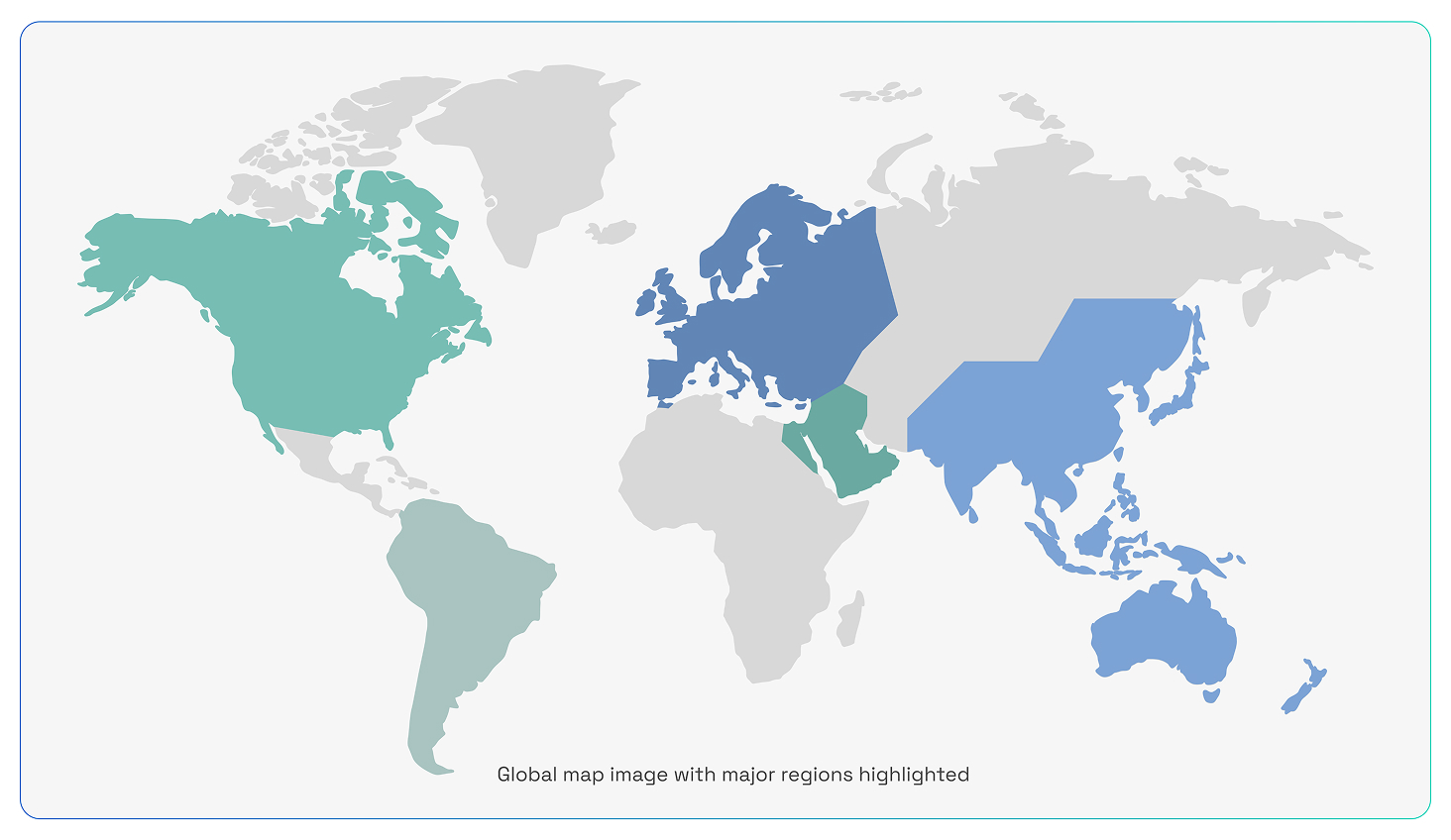
6. By Geography: North America (Dominant Region)
North America holds the largest market share.
Key factors:
- Advanced cloud infrastructure
- Presence of major providers
- Early adoption of AI and automation
- Strong enterprise spending
Fastest-growing region:
- Asia-Pacific (especially India and Southeast Asia)
Drivers: What is fueling market growth?
- Digital transformation
- Omnichannel customer demand
- AI & automation adoption
- Remote work enablement
- Cost efficiency (subscription model)
Restraints (R) – What is limiting growth?
- Data security & privacy concerns
- Integration complexity
- Internet dependency
- Vendor lock-in
Opportunities (O) – Where is future growth coming from?
- Growth in emerging markets (e.g., Asia-Pacific)
- Generative AI & automation
- Industry-specific solutions
- Self-service technologies
Trends (T) – What is shaping the future?
- AI-first contact centers
- Omnichannel → unified CX
- Platform integration (CCaaS + CRM)
- Real-time analytics & personalization
This research study is based on a combination of extensive secondary and primary data collection methods to provide a comprehensive technical, market-oriented, and commercial analysis of Employee Transport Fleet Management.
Secondary Research
Secondary research was conducted using both paid and publicly available sources, including directories and databases such as Dun & Bradstreet, Hoovers, and Bloomberg BusinessWeek. Additional references included journals such as the International Journal of Advanced Research (IJAR), EA Journals, and the International Journal of Technology, Innovation, and Management (IJTIM).
Other key sources comprised annual reports, press releases, investor presentations, white papers, certified publications, and articles by recognized authors. This phase focused on identifying key market players, analyzing their product portfolios, and understanding the overall fleet management ecosystem.
Secondary research was primarily used to gather insights into the market’s supply chain, segmentation, industry trends, regional dynamics, and technological developments. It also helped estimate the overall market size and classify the market into relevant segments, which were later validated through primary research.
Primary Research
Primary research involved conducting in-depth interviews with stakeholders from both the supply and demand sides of the market.
Supply-side participants included industry experts such as CXOs, vice presidents, directors, and executives from fleet management solution providers, system integrators, service providers, and industry associations. Key opinion leaders were also consulted.
Demand-side participants included CIOs, CTOs, CSOs, and end users of fleet management solutions. These interviews provided valuable insights into buyer preferences, current usage patterns, and expectations from service providers.
Primary research was essential for collecting and validating both qualitative and quantitative data, including market size estimates, revenue figures, segmentation, and forecasts. It also helped identify trends across technologies, applications, deployment models, and regions.
Market Size Estimation
Multiple approaches were employed to estimate and forecast the size of the Employee Transport Fleet Management market. Market size was initially calculated by aggregating revenues generated by key companies offering fleet management solutions and services.
Both top-down and bottom-up approaches were used to estimate and validate the overall market size, as well as the size of individual segments. The process included:
- Identifying key market players through secondary research
- Determining supply chain dynamics and market size using both primary and secondary data
- Verifying percentage shares, splits, and segment breakdowns through primary interviews
Data Triangulation
After estimating the overall market size, the market was segmented into various categories and subcategories. Data triangulation was applied to ensure accuracy and consistency across all findings.
This process involved cross-verifying data from multiple sources and analyzing trends from both supply and demand perspectives. The final market figures were validated using both top-down and bottom-up approaches to ensure reliability.
Introduction
1.1 Report Guidance
1.2 Market Segmentation
2. Executive Summary
2.1 Key Market Insights
2.2 Market Attractiveness
3. Research Methodology
3.1 Secondary Research
3.2 Primary Research
- 3.2.1 Data Triangulation and Validation
4. Cloud-Based Contact Center Market Landscape
4.1 Overview
4.3 Ecosystem Analysis
- 4.3.1 List of Vendors in the Value Chain
5. Cloud-Based Contact Center Market – Key Market Dynamics
5.1 Market Drivers
5.2 Market Restraints
5.3 Market Opportunities
5.4 Future Trends
5.5 Impact of Drivers and Restraints
6. Cloud-Based Contact Center Market Global Analysis
6.2 Cloud-Based Contact Center Market Revenue 2022-2033 (US$ Billion)
6.3 Cloud-Based Contact Center Market Forecast Analysis
7. Cloud-Based Contact Center Market Analysis – By Component
7.1 Solution
- 7.1.1 Overview
- 7.1.2 Revenue and Forecast, 2022-2033 (US$ Billion)
7.2 Service
- 7.2.1 Overview
- 7.2.2 Revenue and Forecast, 2022-2033 (US$ Billion)
8. Cloud-Based Contact Center Market Analysis – By Deployment
8.1 Public cloud
- 8.1.1 Overview
- 8.1.2 Revenue and Forecast, 2022-2033 (US$ Billion)
8.2 Private cloud
- 8.2.1 Overview
- 8.2.2 Subsegment 2– Revenue and Forecast, 2022-2033 (US$ Billion)
8.3 Hybrid cloud
- 8.3.1 Overview
- 8.3.2 Subsegment 3– Revenue and Forecast, 2022-2033 (US$ Billion)
9. Cloud-Based Contact Center Market Analysis – By Industry
9.1 BFSI (Banking, Financial Services, Insurance)
- 9.1.1 Overview
- 8.1.2 Revenue and Forecast, 2022-2033 (US$ Billion)
9.2 IT & Telecom (largest share)
- 9.2.1 Overview
- 9.2.2 Subsegment 2– Revenue and Forecast, 2022-2033 (US$ Billion)
9.3 Healthcare, retail, e-commerce, logistics
- 9.3.1 Overview
- 9.3.2 Subsegment 3– Revenue and Forecast, 2022-2033 (US$ Billion)
10. Cloud-Based Contact Center Market – Geographic Analysis
10.1 Overview
10.2 North America
- 10.2.1 Cloud-Based Contact Center Market Breakdown, by Key Country, 2026 and 2033 (%)
- 10.2.1.1 Cloud-Based Contact Center Market – Revenue and Forecast Analysis – by Country
10.3 Europe
- 10.3.1 Cloud-Based Contact Center Market Breakdown, by Key Country, 2026 and 2033 (%)
- 10.3.1.1 Cloud-Based Contact Center Market – Revenue and Forecast Analysis – by Country
10.4 Asia-Pacific
- 10.4.1 Cloud-Based Contact Center Market Breakdown, by Key Country, 2026 and 2033 (%)
- 10.4.1.1 Cloud-Based Contact Center Market – Revenue and Forecast Analysis – by Country
10.5 South and Central America
- 10.5.1 Cloud-Based Contact Center Market Breakdown, by Key Country, 2026 and 2033 (%)
- 10.5.1.1 Cloud-Based Contact Center Market – Revenue and Forecast Analysis – by Country
10.6 Middle East and Africa
- 10.6.1 Cloud-Based Contact Center Market Breakdown, by Key Country, 2026 and 2033 (%)
- 10.6.1.1 Cloud-Based Contact Center Market – Revenue and Forecast Analysis – by Country
11. Competitive Landscape
11.1 Heat Map Analysis
11.2 Company Positioning and Concentration
12. Industry Landscape
12.1 Overview
12.2 Market Initiative
12.3 Partnerships and Collaborations
12.4 Other Developments
13. Company Profiles
13.1 Genesys
- 13.1.1 Key Facts
- 13.1.2 Business Description
- 13.1.3 Products and Services
- 13.1.4 Financial Overview
- 13.1.5 SWOT Analysis
- 13.1.6 Key Developments
13.2 Five9
- 13.2.1 Key Facts
- 13.2.2 Business Description
- 13.2.3 Products and Services
- 13.2.4 Financial Overview
- 13.2.5 SWOT Analysis
- 13.2.6 Key Developments
13.3 NICE Ltd.
- 13.3.1 Key Facts
- 13.3.2 Business Description
- 13.3.3 Products and Services
- 13.3.4 Financial Overview
- 13.3.5 SWOT Analysis
- 13.3.6 Key Developments
13.4 Talkdesk
- 13.4.1 Key Facts
- 13.4.2 Business Description
- 13.4.3 Products and Services
- 13.4.4 Financial Overview
- 13.4.5 SWOT Analysis
- 13.4.6 Key Developments
13.5 RingCentral
- 13.5.1 Key Facts
- 13.5.2 Business Description
- 13.5.3 Products and Services
- 13.5.4 Financial Overview
- 13.5.5 SWOT Analysis
- 13.5.6 Key Developments
13.6 Cisco Systems
- 13.6.1 Key Facts
- 13.6.2 Business Description
- 13.6.3 Products and Services
- 13.6.4 Financial Overview
- 13.6.5 SWOT Analysis
- 13.6.6 Key Developments
13.7 Avaya
- 13.7.1 Key Facts
- 13.7.2 Business Description
- 13.7.3 Products and Services
- 13.7.4 Financial Overview
- 13.7.5 SWOT Analysis
- 13.7.6 Key Developments
13.8 8x8
- 13.8.1 Key Facts
- 13.8.2 Business Description
- 13.8.3 Products and Services
- 13.8.4 Financial Overview
- 13.8.5 SWOT Analysis
- 13.8.6 Key Developments
13.9 Amazon Web Services
- 13.9.1 Key Facts
- 13.9.2 Business Description
- 13.9.3 Products and Services
- 13.9.4 Financial Overview
- 13.9.5 SWOT Analysis
- 13.9.6 Key Developments
13.10 Oracle
- 13.10.1 Key Facts
- 13.10.2 Business Description
- 13.10.3 Products and Services
- 13.10.4 Financial Overview
- 13.10.5 SWOT Analysis
- 13.10.6 Key Developments
13.10 Salesforce
- 13.10.1 Key Facts
- 13.10.2 Business Description
- 13.10.3 Products and Services
- 13.10.4 Financial Overview
- 13.10.5 SWOT Analysis
- 13.10.6 Key Developments
13.10 Mitel
- 13.10.1 Key Facts
- 13.10.2 Business Description
- 13.10.3 Products and Services
- 13.10.4 Financial Overview
- 13.10.5 SWOT Analysis
- 13.10.6 Key Developments
14. Appendix
14.1 About Business Market Insights
14.2 List of Abbreviations
Cloud-based Contact Center: Core Overview
How Cloud-Based Contact Centers Are Transforming Modern Business Operations
🔧 Key Applications
- Enabling Omnichannel Customer Engagement
- Support hybrid and remote work models
- AI-
- Enahance Scalability and Agility
📈 Business Benefits
- Cost Efficiency
- Enhanced Customer Experience
- Advanced Analytics
- Increased Operational Agility
⚙️ Core Technologies
- Interactive Voice Response
- Automatic Call Distribution
- Machine Learning
- Analytics and Reporting Tools
Why it matters: Data-driven decisions driving growth, enabling smarter business decisions.
Market Scope & Analysis
$ 35.05 Billion
$ 116.30 Billion
- By Component (Solutions: ACD, IVR, dialers, analytics, workforce optimization), Services: Professional services & managed services)
- By Deployment (Public cloud [dominant], Private cloud, Hybrid cloud)
- By Industry (BFSI [Banking, Financial Services, Insurance], IT & Telecom [largest share], Healthcare, retail, e-commerce, logistics)
- Genesys
- Five9
- NICE Ltd.
- Talkdesk
- RingCentral
- Cisco Systems
- Avaya
- 8x8
- Amazon Web Services
- Oracle
- Salesforce
- Mitel
- North America
- United States
- Canada
- Mexico
- South and Central America
- Europe
- France
- Germany
- United Kingdom
- Spain
- Italy
- Asia-Pacific
- China
- India
- Japan
- South Korea
- Australia
- Middle East and Africa
- United Arab Emirates
- Saudi Arabia
- Africa
Recent Developments
- With the addition of agentic AI capabilities—AI that can independently assist and even predict customer needs across channels—Amazon Connect has achieved a $1 billion annualized run rate in 2025, putting AWS in a position to regain competitive momentum against well-established CCaaS leaders.
- NICE and Genesys remained among the leading CCaaS vendors in Gartner’s 2025 Magic Quadrant, reflecting leadership in market execution and vision, while AWS, Five9, and Talkdesk are also recognized as key innovators.
FAQ
A1: Synapsea Global projects the global cloud-based contact center market to grow at a CAGR of 23.4% from 2025 to 2035, driven by increasing demand for faster and personalised services and AI-powered automation.
A2: Omnichannel customer engagement, AI-powered virtual agents/chatbots, workforce optimization, and real-time analytics applications are driving the strongest growth in cloud-based contact centers.
A3: Key players in the cloud-based contact center market include NICE, Genesys, AWS, Five9, Cisco, Talkdesk, RingCentral, and 8×8.
A4: The main challenges hindering adoption of cloud-based contact centers are data security and privacy concerns, high integration complexity with legacy systems, network reliability issues, regulatory compliance requirements, and upfront migration or training costs.
A5: Asia-Pacific is expected to witness the fastest growth due to rapid digitalization, strong mobile and internet penetration, and accelerating demand for scalable CX solutions.
A6: BFSI, retail & consumer goods, telecom, healthcare & life science, travel & hospitality, transportation & logistics, government & public sector are key verticals in this market
GET A FREE SAMPLE
This FREE sample includes market data points, ranging from trend analyses to market estimates & forecasts. See for yourself.
NEED A CUSTOM REPORT?
We can customize every report including purchasing stand-alone sections or country-level reports, as well as offer affordable discounts for start-ups & universities.
Share this report:
Seize Tomorrow's Opportunities Today: Access the Full Report
Our Top Selling Reports
- •Water-Soluble Vitamin & Mineral Feed Supplements Market
- •Pyridine & Pyridine Derivatives Market
- •Nutraceutical Ingredients Market
- •Functional Food Ingredients Market
- •Water-Soluble Vitamin & Mineral Feed Supplements Market
- •Pyridine & Pyridine Derivatives Market
- •Nutraceutical Ingredients Market
- •Functional Food Ingredients Market
Personalize This Report
- •Triangulate with your Own Data
- •Get Data as per your Format and Definition
- •Gain a Deeper Dive on a Specific Application, Geography, Customer or Competitor
- •Any level of Personalization
Let Us Help You
- •What are the Known and Unknown Adjacencies Impacting the Digital Health Market
- •What will your New Revenue Sources be?
- •Who will be your Top Customer; what will make them switch?
- •Defend your Market Share or Win Competitors
- •Customized Workshop Request